
September 16 – 28, 2027
-
$6790 DBL / $7650 SGL
-
Ministro Pistarini International Airport (EZE) in Buenos Aires
-
Ministro Pistarini International Airport (EZE) in Buenos Aires
-
A Birder’s Pace
We walk at a birder’s pace, fewer than four miles a day, with breaks along the way.
Join us for a NEW and exciting journey that combines scenic wonders with incredible biodiversity and a chance to explore some of the wildest country in South America. From our start in Buenos Aires, we fly up to Pousadas to explore the second largest wetland complex in the world, the Ibará Marshes, a global stronghold for several range-restricted, threatened, or endangered species. Many notable species occur here in addition to the endemic Ibará Seedeater, including the Strange-tailed Tyrant, Marsh Seedeater, Saffron-cowled Blackbird, Yellow Cardinal, Crested Doradito, and Long-tailed Reedfinch. The vast Ibera wetland system includes a habitat mosaic of rivers, marshes, swamps, grasslands, and wooded islands all used by scores of Yacare Caiman, and a host of wading and water birds including Southern Screamer, Snail Kite, Maguari and Wood Storks, and Bare-faced Ibis. We explore this area in detail including a stay right in the heart at Colonia Carlos Pellegrini, a small village surrounded by pastures, lakes, and woodland patches. A boat trip through this realm is memorable and exceptional for viewing and photography. Like Brazil’s Pantanal, we access this remote birding paradise on a long dirt road, a quiet one where we can stop for scanning—it’s totally possible to log over 100 species in a day. The drier grass areas are home to Greater Rhea, Red-winged Tinamou, Rufous-sided Crake, Long-winged and Cinereous Harriers, and many species of seedeaters. Having a great guide to find and sort them is wonderful!
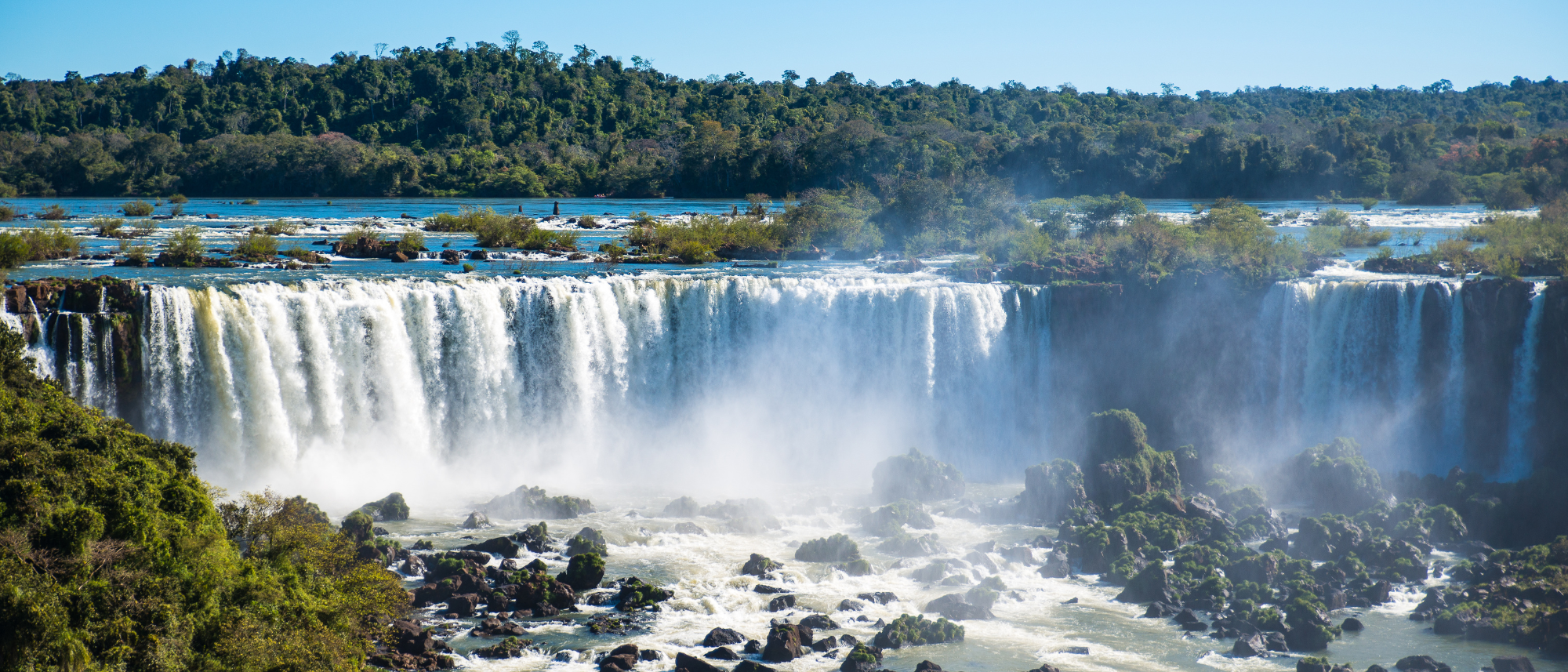
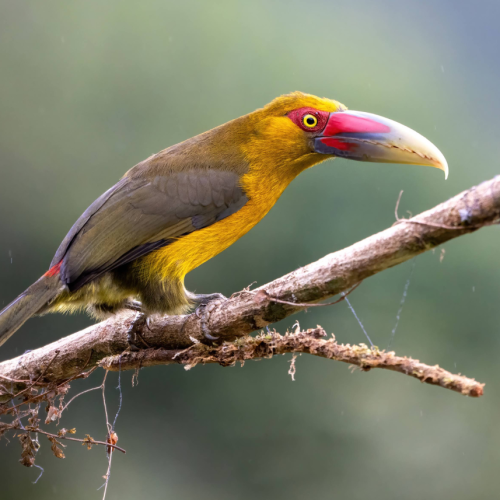
After a real immersion into this global biodiversity hotspot, we continue on to Iguazu Falls, one of the scenic wonders of the world, claimed by many to be the most beautiful of the waterfall areas. Best of all, among the sensory overload of beauty lies a plethora of great birds! Iguazu Falls is one the most important patches of remaining Atlantic Forest vegetation and its suite of birds, associated with the lush forests, is totally complimentary to what we experience in the marshes with very little overlap. We visit both sides of the falls and spend time at a spectacular hummingbird garden in Puerto Iguazu. Birds are colorful and plentiful and may include Saffron Toucanet, Toco Toucan, Surucua Trogon, multiple day-glow tanagers including Black-goggled, Ruby-Crowned, Swallow, Green-headed, and Magpie Tanagers (to mention a few!) and numerous antshrikes and antbirds. En route between Ibara and Iguazu we stop at Urugua-I Provincial Park with hopes to find endangered and beautiful Black-fronted Piping Guans.
We are super excited to add this fine, well-paced itinerary, with enough time in key areas to savor the featured landscapes, habitats, and species.
Highlights
- Explore the world’s second largest wetland system, the incredible Ibará Marshes, home to over 500 species of birds in a 5000-square-mile protected area and one of the wildest places left in South America—located between far better-known Buenos Aires and Iguazu Falls.
- Bird the riverine habitat of South America’s second longest river, the Parana, crossing three countries in its 3000 mile journey
- Cruise through wetlands for up close and personal views of amazing birds including Giant Woodrail—abundant here!
- Stand at the edge of one the world’s most scenic fusion of waterfalls; see Iguazu Falls from the Argentine and Brazilian side
- Search for impressive raptors like Ornate Hawk-eagle, Gray-bellied Goshawk, Cinereous Harrier, both Chimango and Southern Caracaras, Aplomado Falcon, White-tailed Hawk, Black-collared Hawk, and the lowland race of Black-chested Buzzard Eagle
- Seek out the endemic Ibera Seedeater, a migratory grassland species first described in 2016
- Sight mammals like Capybara, Plains Vizcacha, Southern Banded Armadillo, Pampas Fox, Marsh Deer, Black-and-gold Howler Monkey, Neotropical River Otter, and Geoffrey’s Cat; Jaguarundi and Maned Wolf are rare but possible!
- Support conservation with your visit, this area is thriving under the efforts of Fundacion Rewilding Argentina, including the return of good numbers of Red-and-green Macaw!
- Enjoy Argentine wine and local foods, and taste fresh Dorado, the Tiger of the River, grilled at a local restaurant
Trip Itinerary
Itineraries are guidelines; variations in itinerary may occur to account for weather, road conditions, closures, etc. and to maximize your experience.
Thurs., Sept. 16 Arrive in Buenos Aires | Costanera Sur Ecological Reserve
A host from our partner company meets all flights at the International Ezeiza airport and help you transfer directly to our comfortable city hotel, where check-in is available by early afternoon. Take some time to enjoy lunch at your leisure, then enjoy an afternoon of birding at nearby Costanera Sur Ecological Reserve, a wildlife haven and the largest greenspace in the city. We walk easy trails to view a remarkable wetland of pools and reed beds set beside the expansive mouth of the famous Rio de la Plata. If the water levels are high, this wetland area can be teeming with waterfowl, including Lake Duck, Rosy-billed Pochard, Coscoroba and Black-necked Swans, various egrets, and of course, coots … plus a host of passerines, while Chimango and Southern Caracaras patrol the lagoons.
After a splendid first afternoon of birding in the Argentine capital, we return to our hotel to freshen up before a welcome dinner at one of the famous parrillas of Buenos Aires where they cook great steaks and grilled vegetables. Then it’s off to bed early in preparation for the exciting days ahead!
Travel Tip: Most flights arrive from the USA in the early morning hours, and check-in may not be available until afternoon, so if you want to get into a room right away we can help book that for you (additional cost). Otherwise you can relax in the public areas and get some lunch at leisure.
Accommodations in Buenos Aires, Hotel Cyan Americas Tower or similar (D)
Fri., Sept. 17 Flight to Posadas | Parana River | Gateway to the Renowned Iberá Marshes
We leave Buenos Aires this morning on an 80-minute flight (included) north to Posadas city, the capital of Misiones province. After arrival we drive westwards for about one hour to Ituzaingo and check in for two nights at a nice hotel on the banks of the Parana River. This is South America’s second longest river after the Amazon, flowing through Brazil and Paraguay before reaching Argentina. It is a tributary of the Rio de la Plata (after merging with the Paraguay and then Uraguay Rivers) where we birded yesterday. Its name means “Father of the Waters” for its grand size, it is an active waterway for cargo ships and other traffic.
Our afternoon birding takes us on an excursion within the Paraná riverine forest where birdlife is abundant. We hope to see the electric-green Amazon Kingfisher, the rather unimaginatively named Brown-and-yellow Marshbird and Greater Thornbird. Setting off into the woods should quickly produce brilliant Vermilion Flycatcher and noisy Chotoy Spinetail. In the more open grassy areas we hope for views of Red-winged Tinamou and Spotted Nothura along with Cinereous Harrier, Striped Cuckoo (often located by their call), and Lesser Yellow-headed Vulture as they drift above the landscape. We have good chances to find the huge and showy Giant Wood Rail. This region of Argentina is wet and known as the Humid Chaco, creating a transition zone between the Arid Chaco to the west and the humid tropical forests to the east—it feels like a different country! Some of the common mammal sightings are Capybara and the beaver-like Nutria or Coipu. Woodland birds here might include Gilded Sapphire, White-eyed Parakeet, Greater Ani, Greenish Elaenia, Yellow-olive Flatbill, Boat-billed Flycatcher, Purplish Jay, White-rimmed Warbler, Saffron-billed Sparrow, and the sweet-singing Green-winged Saltator.
Enjoy our lodgings along the river in this lovely town where local rules limit tall buildings to give it a quiet feel. This city in the province of Corrientes is immensely popular with sport fisherman who come to seek big Dorado (the Tiger of the Rivers) and other fish such as Surubi. A large hydroelectric dam is nearby. For birders this is the gateway to the world-renowned Iberá Marshes, where over 500 species of bird can be found. The city hosts a “Centro de Aves” with exhibits about conservation and species that abound.
Accommodations along the river in Ituzaingo (B,L,D)
Sat., Sept. 18 Northern Iberá Marshes
We devote a full day to explore the northern section of Iberá National Park where Capybaras abound at the edge of the marshes, Seven-banded Armadillos can be found in the grasslands together with Gray Monjita (a large tyrant flycatcher), and even Maned Wolf is a rare but possible sighting! Making regular stops as we drive across the open landscape, we should see thousands of Eared Dove and Picui Ground Dove. Partly covered in thorny woodland and palms, this landscape is more open than the rainforest and we look for a range of species such as Chaco Chachalaca and Pale-crested Woodpecker that we won’t encounter elsewhere during the tour. We also keep an eye open for a variety of raptors including Aplomado Falcon, White-tailed Hawk, and the lowland race of Black-chested Buzzard Eagle. Maguari Stork often roost beside Wood Stork and Chestnut-capped Blackbird. There are three species of bitterns (Least, Pinnated and Stripe-backed), four species of kingfishers (Amazon, Ringed, Green and American Pygmy), Azure Gallinule, Crested Doradito, White-headed Marsh Tyrant, and so much more.
A special treat this evening is enjoying the local riverine fish, prepared at barbeques at a local restaurant where we have a fun dining experience after tallying up our growing species list.
Accommodations on the river in Ituzaingo (B,L,D)
Sun., Sept. 19 Southern Iberá Marshes
After an early breakfast, we leave Ituzaingo and drive south today along dirt roads, heading to the southeast edge of the Iberá marshes in the recently established Iberá National Park. Iberá is a native word meaning ‘brilliant waters’ and the marshes here are the largest in Argentina, a vast complex of rivers, lagoons, grassy meadows, and woodland that is home to a wonderful variety of wildlife. They are packed with Limpkin and Snail Kite and alive with a superb range of smaller birds together with wildfowl and waders. We spend three nights here, staying at a hotel in front of the marshes near Carlos Pellegrini town. This is a fantastic area for birds and wildlife and we make numerous stops as we approach Laguna Iberá. Dropping into the more humid low-lying grasslands, seedeaters become a common sight with Double-collared, Tawny-bellied, and Rufous-rumped Seedeaters as the most likely species. As dusk approaches, Capybaras (the world’s largest rodent) and Plains Viscacha (a large, gregarious nocturnal chinchilla) emerge.
Accommodations in Carlos Pellegrini (B,L,D)
Mon., Sept. 20 & Tues., Sept. 21 Heart of the Iberá Marshes, the Second-largest Freshwater Wetland System in the World
With two more days to explore the eastern section, we set off in search of local specialties such as the endangered Yellow Cardinal, the attractive Black-and-White Monjita, but most importantly the recently described Iberá Seedeater. The marshes can seem alive with Lesser Grass Finches, shockingly bright Scarlet-headed Blackbird, and among increasing numbers of Brown-and-yellow Marshbird, we seek out Yellow-rumped Marshbird. Rhythmic ticking should reveal the presence of Crested Doradito, a small bright flycatcher with a black eye mask and yellow below.
Taking a gentle stroll along a boardwalk through the marshes adds vocal groups of Black-capped Donacobius, a good chance of Rufous-sided Crake, Green Kingfisher, and Greater Thornbird, along with Large Elaenia, White-headed Marsh Tyrant, and Sooty Tyrannulet. We also get up close and personal with a boat excursion into the marshes where hundreds of Spectacled Caiman guard the coast, elegant Marsh Deer graze, and secretive Pinnated Bittern and Yellow Anaconda might be spotted sunbathing. Small forested islands are often home to Little Woodpecker and Solitary Cacique, while around our lodge boldly colored Yellow-billed Cardinal jump around the feeders. Numerous small pools might reward us with good views of Plumbeous Ibis, Ringed Teal, and the unusual, scruffy necked Chopi Blackbird (named after its sharp, shrill call). Wildlife of all kinds is abundant, with Black Caiman, Howler Monkey and three species of Armadillos among creatures to watch for.
A night outing is certain to produce the abundant Capybara and Plains Vizcacha (a stout rabbit-like rodent) but we also stand good chances of seeing Forest Fox, Crab-eating Racoon, the heavy bodied Rococo Toad, Jaguarundi, and even the shy Maned Wolf is a realistic possibility! Jaguar and Giant Anteater are making a successful return to the National Park here as part of extensive rewilding efforts, so we sure hope for good luck in finding one of these fantastic creatures.
Accommodations in Carlos Pellegrini (B,L,D)
Wed., Sept. 22 Early Morning in Iberá Marshes | On to Explore the Rainforest!
We spend the first hours of the day around the marshes, perhaps savoring our last views of Capybaras, Marsh Deer, and Caiman before departing for the drive northeast into Misiones province. Travelling via Caza Pava and Colonia Garabí we might experience Streamer-tailed Tyrant and their synchronized wing-rotating display and Pearly-bellied Seedeater singing in open grasslands. We proceed into Misiones province, birding local hotspots along the way.
We have lunch en route and should arrive at Aristobulo del Valle in the late afternoon. Aristobulo sits at the western end of the Selva Misionera (also known as the Mata Atlantica in Brazil), a vital rainforest ecosystem that has suffered a great deal of deforestation in recent decades. Encompassing a variety of tropical forest habitats—from dry forest through moist forest to coastal mangroves—it once stretched along the coastline of southeast Brazil and covered parts of Paraguay, Uruguay, and northeast Argentina. More ancient than the Amazon forest, today it survives largely in small, degraded patches and protected areas. Being cut off from other tropical forests has allowed the Selva Misionera to evolve unique ecosystems, which harbor a large number of species found nowhere else on Earth.
An evening visit to this protected area permits us to look for some of the skulking members of the antbird family and, depending on the weather and time availability, we do some owling as well, hoping to see Black-capped Screech Owl, Rusty-barred Owl and Tawny-browed Owl, which are all are possibilities.
Accommodations at Hotel del Parque in Aristobulo del Valle (B,L,D)
Thurs., Sept. 23 Salto Encantado to Wanda
We rise early for a short drive to Salto Encantado, where against a backdrop of Parana rainforest Great Dusky Swift depart their roost. New birds hopefully come thick and fast in the forest as we seek the likes of Surucua Trogon, Red-breasted Toucan, Ochre-collared Piculet, Rufous-capped and Grey-bellied Spinetails. We scan the canopy for skulking Spot-backed Antshrike, Plain Antvireo, the reclusive Rufous Gnateater, stunning male Blue Manakin, Pale-breasted Thrush, Golden-crowned Warbler, and both Black-goggled and Ruby-crowned Tanagers. We also hope to witness the faltering walk of the Short-tailed Antthrush and home in on a Purple-crowned Plovercrest lek (yes, a lekking hummingbird!), where males sit and vocally ‘chip’ away at each other.
By midday we head north to Wanda on the upper Parana River in Misiones Province, with stops along the way that could yield Yellow-headed Caracara, numerous White-eared Puffbird, and perhaps Large-tailed Antshrike. Around Wanda we look to add Scale-throated Hermit, Yellow-fronted Woodpecker, the vocal Spix’s Spinetail; the quietly perched White-throated Spadebill, White-necked Thrush, and Ultramarine Grosbeak of the Atlantic Forest form. Another possible highlight here is the localized Araucaria Tit-Spinetail.
Wanda is a small rural town of about 15,000 people, where Yerba Mate farming and mining of precious stones are major occupations. For birders it’s a great place to access the birding riches of Atlantic Rainforest habitat.
Accommodations at Hotel Amatista in Wanda (B,L,D)
Fri., Sept. 24 Urugua-i-Provincial Park | Wanda
Today we set off on an early morning excursion to Urugua-i Provincial Park, where resident species to look for include White-eyed Parakeet, Grey-rumped Swift, Black-throated Trogon, Grey-headed Kite, Planalto Woodcreeper, Social Flycatcher, Greenish Schiffornis, and Red-rumped Cacique. Around Urugua-i, we explore some of the park’s labyrinthine of tracks and trails hoping to add Southern Antpipit, Scale-throated Hermit, vocal Spix’s Spinetail, Lesser and Scalloped Woodcreepers, handsome yet skulking Bertoni’s and Dusky-tailed Antbirds, and even Planalto Tapaculo. There is so much to see here, possibilities include Sharp-billed Treehunter, Streaked Xenops, and Eared Pygmy Tyrant to mention a few. The long list of possibilities for today also includes the spectacular Blond-crested Woodpecker, White-throated Spadebill, Black-tailed Tityra, Chestnut-headed Tanager, and many more. Amongst raptors, Ornate Hawk-Eagle and Gray-bellied Hawk are two of the rarest but possible sightings. One of the highlights however might be an encounter with Brazilian Tapir or a group of White-lipped Peccaries.
We return to Wanda for a nice dinner, time to tally up our sightings, and enjoy a well-deserved rest.
Accommodations at Hotel Amatista in Wanda (B,L,D)
Sat., Sept. 25 Puerto Iguazu | Forest Birding | Local Hummingbird Feeders
We have an early morning, birding around the gardens of our lodge and after breakfast we depart from Wanda to drive north, heading for the renowned Iguazú Falls—arguably the most spectacular waterfall system in the world. The falls are surrounded by humid subtropical forest (a habitat formerly more common in adjacent Brazil, where it has almost disappeared due to land development). Northeast Argentina now holds the largest and most continuous extension of this forest, offering some superb tropical birdwatching: tanagers, antbirds, toucans, manakins, parrots, motmots, trogons, and tyrant flycatchers.
Arriving here at lunchtime, we make a superb stop at hummingbird feeders in Puerto Iguazú. Run by a famous Brazilian woman who maintains the best set of hummingbird feeders in the country, the garden is alive with the noisy zaps of up to seven busy species of hummingbirds. Delights include Swallow-tailed Hummingbird, the superb Black Jacobin, Black-throated Mango, Violet-capped Woodnymph, and Versicolored Emerald, together with Violaceous Euphonia, Blue Dacnis, and plenty of rival nectar feeders, the Bananaquits.
Driving out to other tracks through the forest, including the famous RN (Ruta Nacional) 101, brings us yet more new birds … perhaps a Rufous-capped Motmot or a croaking Spot-billed Toucanet. Birding the tropical forests here can be especially exciting when we encounter a mixed feeding flock, which here might include such treats as the remarkable Black-billed Scythebill, White-eyed Foliage-gleaner, Lesser Woodcreeper, Streak-capped Antwren, and the dapper Chestnut-bellied Euphonia.
Tonight we enjoy our lodgings and the staff’s hospitality in the Iriapu Reserve on the outskirts of Puerto Iguazu, close to the falls.
Accommodations at Hotel Selva de Laurel (B,L,D)
Sun., Sept. 26 & Mon., Sept. 27 Two Full Days at Incredible Iguazu Falls | Visit Two National Parks In Argentina & Brazil
Iguazú Falls is truly one of the world’s most awesome natural wonders. On the Argentinian side, access is outstanding: a series of walkways brings you right up to the thunder and spray of the water and to the Great Dusky Swift that cling precariously to the rocks behind. Our first morning at the mighty Iguazú Falls is devoted to exploring the forest by means of well-maintained trails that give fantastic views of this small corner of the national park. Here, a staggering 275 waterfalls make the ground almost shake, and the area hosts many superb species, including the endangered Black-fronted Piping-Guan and abundant Plush-crested Jay. We can expect to encounter a plethora of parrots, hummingbirds, woodcreepers, flycatchers, and tanagers not seen during the preceding days. In particular we hope to find the exquisite Swallow-tailed and White-bearded Manakins. There are strutting Giant Cowbird and a variety of tanagers including Magpie, Green-headed, and Swallow. Gangs of Coatis loaf about like loitering youths. Birdlife tends to slow down quite dramatically in the afternoons so we then largely devote our time to admiring the spectacular waterfalls for which Iguazú is so rightly renowned. One walkway extends out above the main falls themselves. En route to this, we should see White-winged Swallow perched on the handrails or on rocks mid-river. Standing on the suspended platform and looking down into the roaring, ‘steaming’ waters, the sheer volume of water crashing over the edge is mesmerizing.
The second day we also visit the falls from the Brazilian side, offering a different but spectacular view to the throat of the Iguazu river. Toco and Red-breasted Toucans, Chestnut-eared Aracari, and Blue-winged Parrotlet are regularly encountered and, in the late afternoon, we hope to witness the remarkable spectacle of thousands of Great Dusky Swift gathering overhead before diving down and dashing through the cascading water to their evening roost behind the falls!
In the late afternoon we return to Argentina for a nice dinner, time to tally up our species, and rest in our hotel.
Accommodations at Hotel Selva de Laurel (B,L,D)
Tues., Sept. 28 Early Morning Birding Iguazú | Return Flight to Buenos Aires & Onward
Puerto Iguazú and its surroundings give us such a great place for birding that on our final morning here we might still have a chance to add new birds. We visit a small reserve by the river where perhaps a Plain-winged Woodcreeper, Sepia-capped Flycatcher, or a tiny Eared Pygmy Tyrant comes our way, or we might enjoy more views of Rufous-crowned Greenlet, the superb Blond-crested Woodpecker, or a diminutive Creamy-bellied Gnatcatcher. Toco Toucan often perch on a bare snag protruding through the forest canopy and we may see a Snail Kite flying low overhead as we depart after lunch for the short drive to Iguazú airport in time to catch our early afternoon flight back to Buenos Aires.
Arriving in Buenos Aires, we transfer to the international Ezeiza airport for flights back home. (B,L)
Guide
Chris Harbard
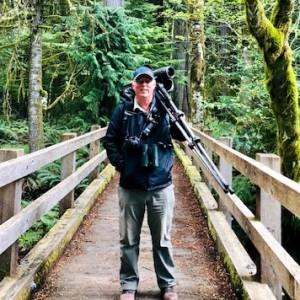
Chris Harbard is a well-known British ornithologist and conservationist who now lives in SE Arizona. After 24 years working with the world’s largest bird conservation organisation, the Royal Society for the Protection of Birds, he moved to the Austrian optics company Swarovski and managed their birdwatching website for several years. He is now a freelance author, editor, broadcaster and lecturer, as well as an occasional bird guide in SE Arizona where he and his wife help to run the Southwest Wings Birding and Nature Festival. He is on the board of the Arizona Field Ornithologists.
Chris writes for Birdwatch magazine and was editor of the Birdwatchers’ Guides series of books. His own books include Birdwatch, Songbirds, A Birdwatcher’s Quizbook, A First Guide to Birdwatching.
Working as a naturalist lecturer on board expedition cruise ships for the last eighteen years has taken him to remote areas of the Arctic, Antarctic, Atlantic and Pacific. Although his main area of interest is birds, especially seabirds, he also enjoys a range of other wildlife such as cetaceans, butterflies, dragonflies and plants.
Other trips with Chris Harbard
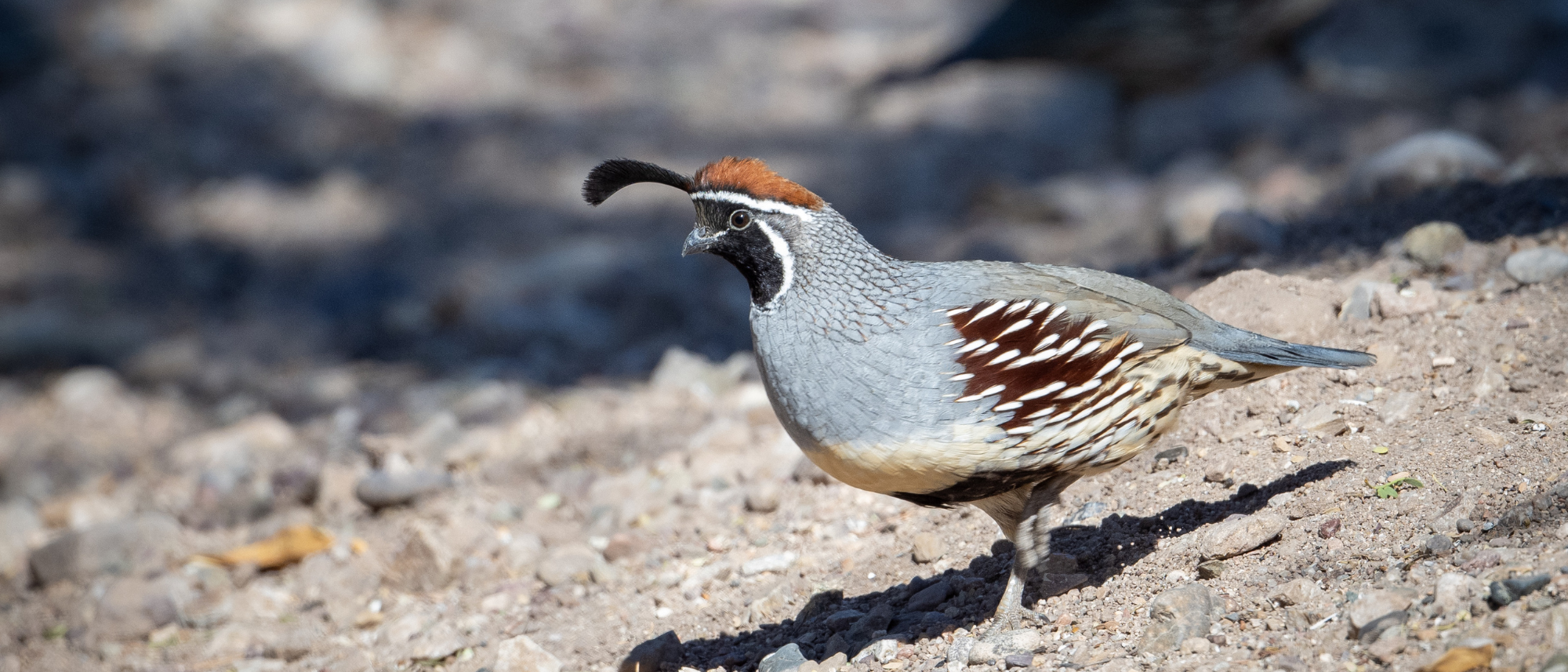 | Southeast Arizona: Sky Island Fall SamplerNovember 7 – 14, 2027 |
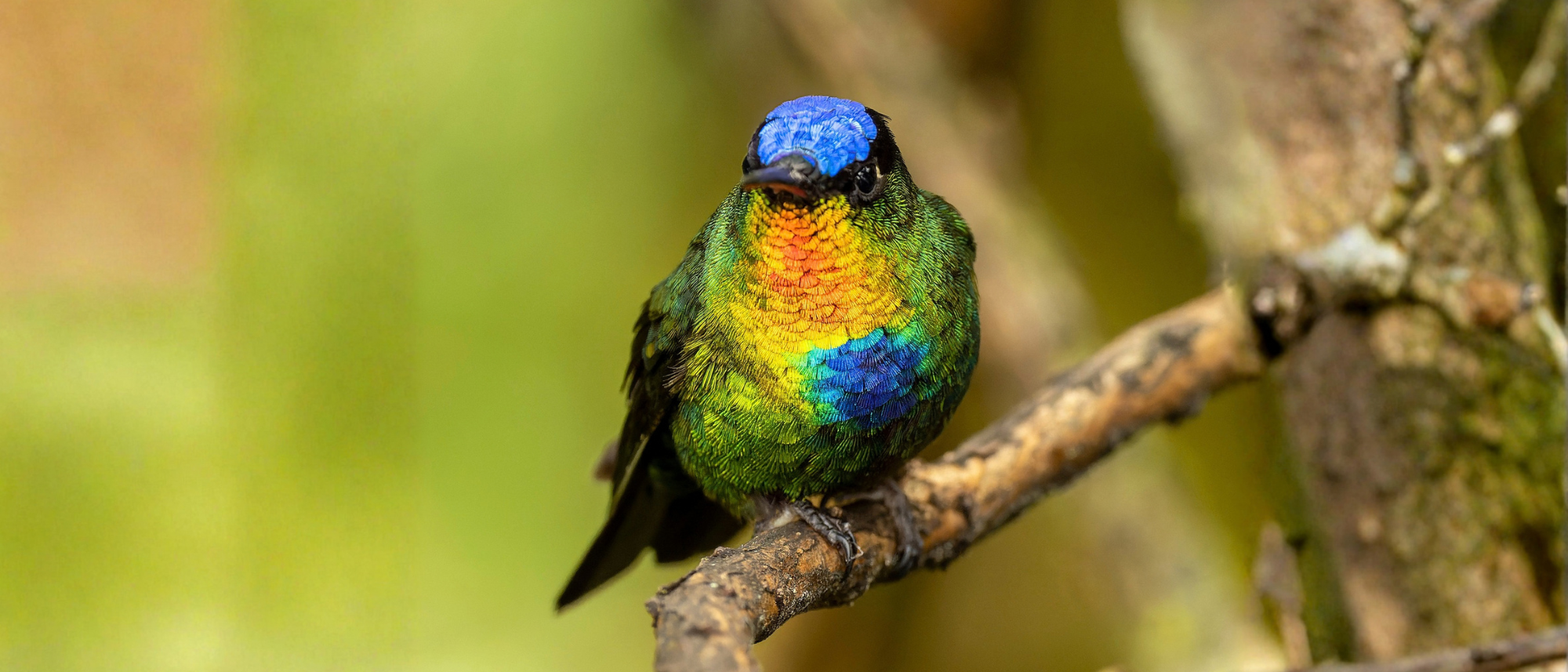 | Costa Rica: Birding & Summer FunJuly 9 - 15, 2027 |
 | Arizona Monsoon Madness: Birding & Nature in a Season of Wonder!August 19 - 26, 2027 |
 | Svalbard: North Spitsbergen ExplorerJune 15 - 22, 2027A Summer Solstice Departure - FULL! See our 2028 cruise departures. |
 | Belize: Three Great LodgesApril 6 - 16, 2027 |
 | Trinidad & Tobago: Incredible Birds & WildlifeMarch 18 - 27, 2027 |
 | Arizona: Sky Island Winter Birding BlitzFebruary 20 - 26, 2027 |
 | Christmas in Costa RicaDecember 22 - 29, 2026FULL - See our Trinidad Christmas departure! |
 | Oaxaca Valley: Birds, Culture & CraftsDecember 1 - 9, 2026FULL - See our 2027 departures! |


Cost of the Journey
The cost of the 13-day main tour is per person, based on occupancy: $6790 DBL / $7650 SGL.
Tour price includes 12 nights’ accomodations, all meals as noted in the itinerary, transportation during the journey, professional guide services, park and other entrance fees, and miscellaneous program expenses. All tips other than your NJ guide (optional) and local guide are included (this includes tips for your driver, lodge and staff, day activities, meals and other services).
Tour cost does not include: airfare to or from Buenos Aires, or personal expenses such as laundry or drinks from the bar. The tour cost does not include internal flights, which will be added to your invoice. These flights are estimated at $800 per person, and subject to change.
Travel Details
Please plan to make air travel plans only after the minimum group size has been met. We will send you a confirmation email as soon as the trip has been confirmed.
Arrival and Departure Airport: Ministro Pistarini International Airport (EZE) in Buenos Aires
Arrival Details: Plan flights to arrive September 16, 2027, no later than 4 PM in order to join the group for dinner.
Departure Details: Plan flights to depart September 28, 2027, after 8 PM. We have a flight back to Buenos Aires in the afternoon.
Travel Tips: If you arrive early to rest up from your travels, we can book an early night for you at our first night tour hotel, the Cyan Americas Tower Hotel. The transfer to the hotel for those arriving early is around $90 for up to 3 people. If you want to explore Buenos Aires, there are several interesting things to see near the hotel. The world renown National Museum of Fine Arts (Museo Nacional de Bellas Artes) has over 12,000 pieces of artwork from both Argentinian and international artists. There are also several popular plazas, parks, and monuments in this area and it’s great for walking around if you want to stretch your legs after a long flight. This area is about a mile from the hotel and an easy 5 minute taxi ride or 30 minute walk.
If you prefer to depart Buenos Aires the morning after the last day of the tour, we recommend the Posada de las Aguilas. The hotel is located 5 minutes from the Ministro Pistarini International Airport (EZE) and they provide a free airport shuttle.
Entry Requirements: See “Essential Information” section under the “Know Before You Go” tab.
Frequently Asked Questions
This information is important for being prepared for your journey; we want you to have the best experience possible. If you only read one section, this one is key!
Ahead of Your Tour
- Make sure your passport will be valid at time of entry until after the date of your scheduled return to the U.S. See "Passports, Visas & Documentation" section below for details.
- No Visas are required for U.S. citizens for stays of this tour's duration in Argentina. If you are from another country, please contact the Embassies of Argentina websites for guidelines.
- As of May 28, 2025, the following is now required to enter Argentina (see Passports, Visas & Documentation section below for details):
- Valid travel medical insurance
- Return or onward ticket
- Accommodation details
- Please check current CDC recommendations for travel to Argentina and consult with your doctor about general travel vaccinations you should have as precaution for travel. See the “General Health and Inoculations” section below.
- Soft sided luggage/duffel bags are easiest for packing the vans. Pack essential medications in your carry-on luggage, as well as one day of clothing and optics in case of luggage delay. See "Packing List" tab for details.
Passports, Visas & Documents
Guidelines and regulations can change and compliance is the traveler's responsibility. It is always advisable to double-check the country’s documentation requirements 60-90 days ahead of traveling. Information for U.S. citizens can be found at: https://travel.state.gov/content/travel/en/international-travel/International-Travel-Country-Information-Pages/Argentina.html. If you are from another country, please contact the tour destination’s embassy website for guidelines.
Passport: At the time of writing, U.S. citizens must have a passport that is in good condition and at minimum is valid at the date of entry through your scheduled return to the U.S. However, we highly suggest at least 3 months validity beyond the end of the tour to allow for unexpected delays in return travel. Please check that expiration date! You should have at least one blank page per entry stamp. The blank pages need to say “Visas” at the top. Pages marked “Amendments and Endorsements” will not be accepted.
Visa: At the time of writing, a tourist visa is not required for US citizens for tourist visits of this length.
*As of May 28, 2025, the following are additional requirements to enter Argentina:
- Valid travel medical insurance: Travelers must hold active medical insurance that provides coverage for their entire stay in Argentina. Full health coverage and repatriation is available through Allianz Travel Insurance.
- Return or onward ticket: Proof of departure from Argentina (such as a return flight or onward travel ticket) is required.
- Accommodation details: A hotel reservation or the address where the traveler will be staying must be presented upon arrival.
As a precaution for lost or misplaced documents you carry on your person during travel, we highly recommend you keep hard and digital backup copies on your phone (either photo or PDF scan), as well as a hard copy left with your emergency contact at home. The recommended important documents to copy include, but are not limited to; your passport ID page, travel visa, the front and back of your credit card(s), the airline barcode on your luggage. This will greatly expedite getting new ones if necessary – we hope everyone will always keep travel documents close so that losing them will not be an issue.
General Health & Inoculations Information – Be Prepared!
Health requirements for entry to any country can change. It is always advisable to double-check the country’s health requirements and recommendations 60-90 days ahead of traveling. A helpful website for planning is the Centers for Disease Control and Prevention (CDC) webpage for Argentina or reach them by phone at (800) CDC-INFO (800-232-4636).
We will share your health information with your guide. This information will be kept confidential but is very important as we want to be best prepared in case of medical emergency.
Vaccinations: Bring copies of your current vaccination records with you. At the time of writing, there were no required vaccinations to enter Argentina. However, the CDC recommends that all travelers be up to date with routine vaccinations and basic travel vaccines (such as Hepatitis A and Typhoid) before traveling to any destination. Please check with your doctor for recommendations at least 4-6 weeks before departing on your trip.
Prescriptions: It is a good idea to pack any meds you take regularly in your carry-on luggage. Bring an extra pair of glasses or contact lenses. Bring an adequate supply of any prescription medications you use, a copy of the prescription and a list of generic names of your medicines as “back-up” in case it is necessary to purchase drugs while abroad. You’ll want to keep medications in their original, labeled containers.
Allergies: To be prepared for environmental triggers to allergies or breathing difficulties, please bring your allergy and/or asthma medication(s). If you have severe allergies talk to your doctor about carrying an EPI pen and notify your guides. It is also recommended to carry with you an up-to-date record of known allergies, chronic medical problems and Medic Alerts so that, if necessary, emergency treatment can be carried out without endangering your health.
Common Ailments: We recommend that you bring a travel-sized first aid kit and a supply of standard over-the-counter medications for common ailments (such as upset stomach, headache, motion sickness, diahhrea, minor scrapes, bug bites, etc.). Altitude sickness can affect some and, if there is a concern, be prepared.
Altitude Illness: According to the CDC's website, day trips to high-elevation destinations less than 8000 ft. with an evening return to a lower elevation are much less stressful on the body, depending on the time provided for your body to adjust. However, overnights at higher altitudes may have more adverse effects on your body and you should be informed about altitude illness and Acute Mountain Sickness (AMS) (see CDC's information for Altitude Illness). The most general symptoms are headache and occasionally fatigue and dizziness. You’ll want to take it easy, particularly at first. The likelihood of these symptoms can be reduced by resting, drinking plenty of water, avoiding alcohol, and taking aspirin. In addition, we will optimize acclimatization by adjusting itineraries to avoid going “too high too fast." If you have worries about the altitude, ask your physician about medications (such as Diamox) that may be right for you.
Weather & Climate
In general, the weather during your stay will range from cold to comfortable, with temperatures from the 30s°F in the Andes and to the low 80s°F in the lowlands, and rain and wind are always possible.
Temperatures at low elevations in Salta and at Iguazu Falls during the extension mostly range from mid-80s°F in the day to mid-60s°F at night. Temperatures in the Andes will be much cooler; night-time temperatures can be especially chilly. Rain is likely.
Check your favorite weather website closer to your departure to better predict what the weather will be on your adventure.
Food & Drinks
Menus at lodges and restaurants are varied, sustainably based on the wonderful local ingredients available, and delightfully prepared in a sanitary environment. Just use common sense, and ask for recommendations from your hotel or guide. Argentine cuisine can be amazing.
Tap water quality and access to clean drinking water varies from region to region, so be prepared to use purified water for drinking and brushing your teeth.
One of the many ways we strive to do our part for the environment is by intentionally reducing our consumption of plastics and we ask that you bring a reusable water bottle. Drinking water is provided for you to refill a bottle and bottled water will be available for field trips where refilling your water bottle is not an option. Your guide will let you know when bottled water is preferable.
There are some great water filtering bottles on the market today that are great for travels abroad. We encourage you to invest in one (such as Lifestraw or GRAYL Ultrapress or SteriPen). A little research will be well worth the effort to reduce the reliance on single-use plastics when purified water refills are not readily available.
Packing, Clothing & Laundry
See “Packing List” tab for more detailed information and checklists, but in summary, we emphasize that you pack light in soft-sided luggage (easier to load in vans and charter planes), plan for dressing comfortably in layers (for managing varying conditions in any given day), and please pack your personal medication, travel documents, optics, and other essential items in your CARRY-ON, not in your checked luggage. Laundry services are available at most lodgings for an additional fee, but be prepared to hand launder if you need to.
Spending Money
The official currency in Argentina is the Argentinean peso; in Chile, it is the Chilean peso. We advise you carry a mix of different types of payments, such as cash, an ATM card, and a credit card.
For the current exchange rate, please refer to an online converter tool like www.xe.com or your bank. U.S. dollars in good, crisp condition (no rips or tears) are taken as a form of payment but shopping for smaller handicrafts may necessitate using local currency. If you plan to exchange cash in country (which often brings a better exchange rate than exchanging before you depart), bring large U.S. bills ($50 or $100) in good, crisp condition. You may also wire money to yourself (Western Union) and get an even better rate when you pick up your cash, though the line may be long. If you are open to using a cueva (cambio), you can research "blue dollar" exchange rates at https://bluedollar.net/ ahead of time. Ask your local tour guide or hotel for recommendations for where to find the best exchange rates.
When using a local ATM to withdrawal cash, keep in mind that it will dispense local currency, but know that it might only accept cards from local banks or not allow cash advances on credit cards. Many U.S. banks charge a fee of $1 - $5 each time you use a foreign ATM. Others may charge you a percentage of the amount you withdraw. Check with your bank before departure. You must become familiar with how to use your ATM card and PIN number ahead of the journey.
We suggest you have more than one card available, if possible. You may want to bring more than one brand of card (VISA and Mastercard are commonly accepted; American Express is less common). You can use credit cards at lodges to pay your bar and gift tabs. Not every shop will accept every card. Some smaller shops and restaurants, or taxis require cash, so it is always a good idea to ask before making a purchase. Also, we recommend that you advise your bank or credit card company that you will be traveling abroad to avoid questions, card freezes, or charges. If you have a choice of cards, bring one with no foreign exchange fees.
Traveler’s checks are not widely accepted. They can be difficult to exchange. We do not advise you use them.
Gratuities
We hope that you will be pleased with all professional services offered on this tour. All tips for all services of your tour are now included in your tour price, with the exception of your main guides. The local guide is your main guide, if there is more than one, they will share your gratuity. The recommended rate is $10.00 - $15.00 per day per guest. You may also wish to tip your Naturalist Journeys guide/host if you have one on your tour; this should be done separately and the same suggested rate applies. We suggest you bring two envelopes or cards to make it easy to share your gratuity at the end of the tour. If you are on an extension, that may be a different local guide for those days.
Tipping to your guide(s) to show your appreciation is entirely at your discretion and should reflect your level of satisfaction of the service provided. If you wish to offer a tip, know that they appreciate anything you care to give. Of course, you are welcome to give more in recognition of exceptional service.
Please note recommended tips are quoted in U.S. dollars. Tips should be converted and paid in local currency.
Donations & Gifts
We enjoy interacting with local people. Why not bring a small photo album or load your tablet with some photos of your life to share? Or some small lightweight gifts – hair ties, costume jewelry, memory sticks or flash drives, etc. Be creative here. Also for kids, school supplies – marking pens, activity cards such as number cards, small notebooks, and pencils are a big hit, we can surely find a home for these in the smaller rural villages. Children’s books are a treat, especially if they are in Spanish.
Guides at the lodges are often isolated. They always enjoy a current newspaper, nature magazine, and books. If you have an old USA field guide you are not using, these are great for them to see some of the migrants and birds from another area.
Cell Phones & Internet Service
Your guide is well connected and can help if any urgent communication need arises. However, it is highly recommended that you travel with a cell phone, if only as a precaution for the unfortunate occurrence of a medical emergency during an outing and needing swift accessibility to critical personal or medical contacts.
Please check with your wireless provider to see if your phone and service will work in your destination country. Options include activating international roaming, purchasing a local SIM card at the airport (newer phones may not accept SIM cards), or simply turning off cellular service and relying on Wi-Fi to make calls and access the internet. If your phone can connect to Wi-Fi, you may be able to make voice and video calls free of charge. Another option if you have access to Wi-Fi is to use smartphone apps like Skype, WhatsApp, or Viber to send text messages, and make voice calls, or video calls. Many smartphones, tablets, or laptops come with one of these apps pre-installed or you can download for free.
Your hotels and most local restaurants provide Wi-Fi at least in their common areas. Although it is generally a reliable service, it can be affected by adverse weather conditions due to the remote location.
Make sure if you do NOT want to use your cell phone that you turn off your cellular data. You could incur huge charges if you are not on Wi-Fi. Putting your phone in airplane mode if you mainly use it for photos will save the battery as well.
Please refrain from taking or making cell phone calls in the vehicles when traveling with other passengers, unless it appears to be an emergency. This disrupts other guests, plan on cell phone call use on your own time.
Electricity
The standard voltage in Argentina is 220 Volts, alternating at 50 HZ. If you travel to Argentina with a device that does not accept 240 Volts at 50 Hertz, you will need a voltage converter. Most modern appliances now convert for you but check that your cord has a box on it to do so or is labeled to do so. Power plugs and sockets in Argentina are types C and I. You will need a power plug adapter. For more information: https://www.power-plugs-sockets.com/argentina.
Time
Argentina is on Argentina Time (one hour ahead of New York) and does not observe daylight savings time. Check www.timeanddate.com before leaving home for your conversion.
Questions?
Please contact Naturalist Journeys by email at clientservices@naturalistjourneys or telephone at our office: (866) 900-1146 if you have any questions. Many thanks for traveling with us and we hope you enjoy your journey!
Pace of the Tour & What to Expect
You will receive a Schedule-at-a-Glance and list of hotels (our eContact List) a few weeks before your departure. This will serve as an outline for each day and alert you to any recent changes made in the schedule or to our hotels, if needed.
Our journeys are set up to follow the rhythm of nature. Our focus is on birding and nature; we offer full, well-planned field days and often get up early for that magical time around dawn. We generally follow the published itinerary, but we stay flexible to the weather, wildlife opportunities and the interests of the group. Your guide will keep you apprised of the next day’s schedule at each evening meal, noting what to bring and what to prepare for. Questions and/or concerns are welcome.
The pace of our Naturalist Journeys tours is moderate; to fully participate you should be able to get in and out of vehicles several times a day, and walk 1-3 miles over uneven terrain. It is important to participate with a flexible attitude as adjustments may be made in our schedule to make the most of our time in the field or for other purposes at your guide's discretion. We are not a “listing” bird company that drills down on target species, but at times we do wait for those special species unique to the places we visit. During the day, we take time to stop for photos and for educational opportunities to learn about conservation projects, landscapes, and geology. We appreciate other taxa as well as birds, with mammals often the biggest draw but plants and butterflies are also very popular. Our clients often lend their own expertise to the mix.
We like to make meals a fun and memorable part of the experience, too. Breakfasts are often at hotels, and we carry snacks, fruit, and water in the vans each day. Lunches are a mix of picnics in the field (weather dependent) and a chance to dine with locals at small cafes and restaurants. For dinner, we pride ourselves in our homework to keep up with the best choices for dining, choosing restaurants with atmosphere that specialize in local foods. On occasion we keep dinner simple to go back out in the field for sunset wildlife viewing or night walks. In some remote locations, our choices are limited. If you are tired, room service for dinner may be an option you can choose.
Naturalist Journeys International Trips: Guide Role
Naturalist Journeys supports ecotourism and the development of excellent local guides. Once we know our international partners and guides well, we can send out small groups working directly with these trusted partners, adding a Naturalist Journeys guide to assist the local expert when we have a group of 6-7 or more. This helps us keep your costs down while retaining tour quality. The local guide is your main guide. You can expect your Naturalist Journeys guide to be well-researched and often they are experienced in the destination, but their role is not to be primary, it is to help to organize logistics, help you find birds, mammals, and interesting other species in the field, keep reports, help facilitate group interactions, and to keep the trip within Naturalist Journeys' style. Local guides live in the countries we travel to, know the destinations intimately, and are often the strongest force for conservation in their countries. They open many doors for us to have a rich experience.
Smoking
Smoking is not permitted in any vehicle or in any situation where the group is participating in an activity together, such as a vehicle excursion or a guided walk. Please respect all designated smoking areas at hotels and restaurants.
Transportation
As a courtesy to each other, we ask that all travelers please rotate seating. On international trips we may all be in one small bus, on some trips we are in vans, particularly the roomy Sprinter Vans when available. Some areas require us to be in smaller 4-wheel drive or safari vehicles. Rotation allows you to sit with different drivers and alternate front and back seating.
Photo Release & Sharing
We take many group photos and will share photos with the group. And after your tour, we will organize a chance to share photos via Dropbox or Google Photos. Please note that this is our policy and if you prefer to be excluded, we need to know ahead of your tour.
By registering for this tour, you agree to grant to Naturalist Journeys and its authorized representatives’ permission to record on photography film and/or video, pictures of my participation in the tour. You further agree that any or all of the material photographed may be used, in any form, as part of any future publications, brochure, or other printed materials used to promote Naturalist Journeys, and further that such use shall be without payment of fees, royalties, special credit or other compensation.
Travel Insurance
You are traveling in remote areas. Naturalist Journeys strongly recommends you have full medical and evacuation insurance from a company such as Allianz, for all international travel. If you do not have medical coverage or evacuation coverage on your existing travel insurance policy or for some reason elected not to take that out, we advise getting an evacuation plan with Global Rescue, World Nomads, Medjet, Allianz (they can do evacuation only) or a similar company. These plans are typically $300-$400 for a year for multiple destinations. This coverage may be a part of a larger Travel Insurance policy but can also be purchased on its own.
Questions?
Please contact Naturalist Journeys by email at clientservices@naturalistjourneys.com or telephone our office: (866) 900-1146 if you have any questions. Many thanks for traveling with us and we hope you enjoy your journey.
Other Trips You May Like
Women's Only Departure