July 20 – 31, 2027, w/Zambia’s Kafue National Park extension
-
$8490 DBL / $9090 SGL
-
O.R. Tambo International (JNB) in Johannesburg, South Africa
-
O.R. Tambo International (JNB) in Johannesburg, South Africa
-
Safari Style
Safaris involve extensive time in game-viewing vehicles for safety reasons; we travel among large predators in the parks. A walking safari may be available during the journey at a birder's pace and typically under three miles with a guard. We can walk at camps but typically not on game drives.
Conservation International designates South Africa as one of the three most biodiverse countries in the world. Which is why we are so proud to offer three distinct itineraries to this incredible country. Our long-running classic Birding & Wildlife Safari traverses the traditional Cape Town to Kruger route, our newer, birding intensive Eastern South Africa tour explores from the subtropical east coast to the giant Drakensberg mountains; and NEW this summer is our specialty mammals and birds tour to the lesser known areas of the Karoo and Kalahari semi-desert regions, famous for their unusual mammals and regionally endemic birds. This inaugural tour perfectly complements our other two South Africa tour offerings.
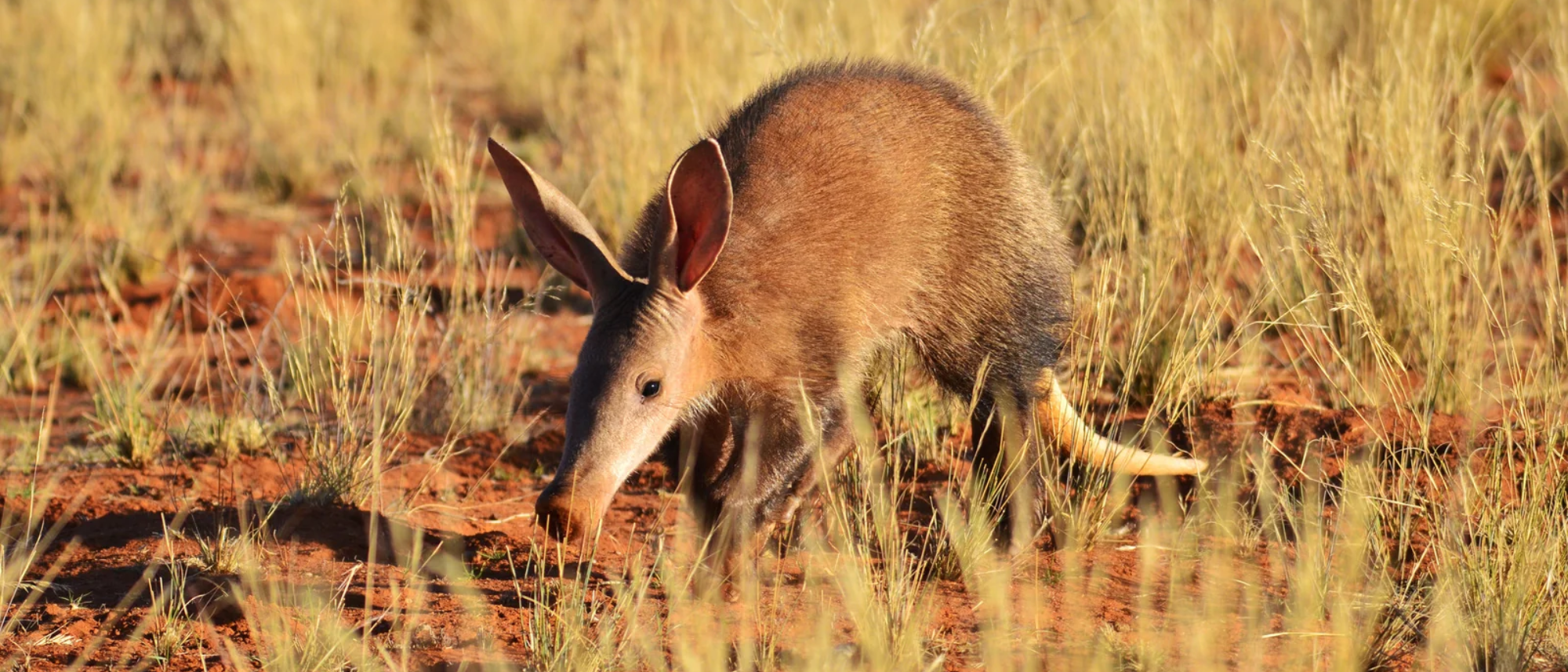
This is the second tour in our founder Peg Abbott’s In-depth and Incredible Africa series, with a strong focus to mammals alongside landscapes and birds, and we access both private ranches and national parks to attempt to find some of the most specular and elusive mammals of the arid zones, smaller species not often found on standard safaris. Our route is designed specifically to find Aardvark, Aardwolf, Meerkat, Caracal, Brown Hyena, and Cheetah, with a chance of seeing rare small cats and other equally interesting small mammals such as Rock Sengi (also known as Elephant Shrew). The private ranches we visit are conservation success stories and through their restoration and rewilding projects we have a chance to see many antelope, from Roan to Sable to Gemsbok to Greater Kudu, and more. Our extension to Kafue National Park in Zambia is one of the best places to see classic large mammals, both prey species and predators, and known for regular sightings of Wild Dog, Leopard, Lion, Cheetah, and more.
Birds abound, from many species of bustards and korhaans, Blue Cranes (South Africa’s national bird), Secretarybird, and Crimson-breasted Shrike, to a huge diversity of larks, some endemic to the region. Along the way, we encounter vast desolate landscapes, amazing night skies, and the Orange River rushing through an impressive gorge before tumbling down the Augrabies Falls. Our tour is in South Africa’s winter, an excellent time to see the nocturnal mammals that come out very early in the evening at this time of year; it’s also dry, giving great wildlife viewing without the dense green grass of summer. The days can be really nice and warm, nights are crisp to chilly!
Highlights
- Search for elusive nocturnal mammals, including Aardvark, Aardwolf, Caracal, Bat-eared Fox, and the rare Black-footed Cat, on exciting night drives through private wildlife reserves.
- Explore the Karoo Gariep Conservancy and Marrick Private Game Reserve, conservation success stories where restored habitats support Meerkat, Rock Sengi, and an impressive diversity of antelope.
- Discover South Africa’s remarkable birdlife, including Blue Crane, Karoo Korhaan, Ludwig’s Bustard, Secretarybird, Crimson-breasted Shrike, and a wealth of regional endemics.
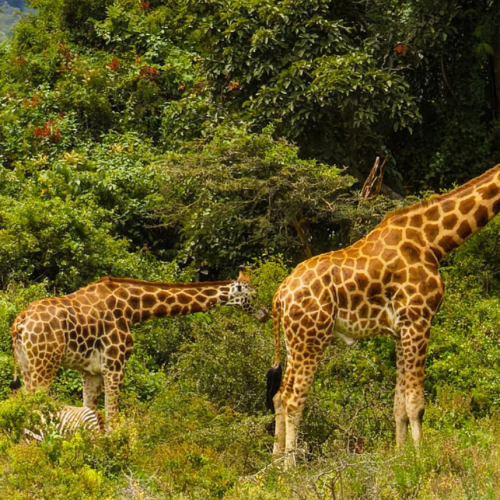
- Visit Mokala National Park, searching for Southern Giraffe, White Rhinoceros, Sable, Roan, Gemsbok, and other mammals amid beautiful savannah landscapes.
- Marvel at the dramatic Augrabies Falls, where the Orange River plunges through a rugged granite gorge, and watch for Klipspringer, Verreaux’s Eagle, and specialized desert birds.
- Spend four nights in Kgalagadi Transfrontier Park, exploring the striking red dunes and dry riverbeds of the Kalahari in search of black-maned Lion, Cheetah, Leopard, Brown Hyena, and spectacular raptors.
- Extend your safari to Zambia’s Kafue National Park, exploring the wildlife-rich Busanga Plains in search of African Wild Dog, Cheetah, Lion, Leopard, Wattled Crane, and more.
Trip Itinerary
Itineraries are guidelines; variations in itinerary may occur to account for weather, road conditions, closures, etc. and to maximize your experience.
Mon., July 19 Recommended Arrival Day (not included)
Our tour starts bright an early tomorrow, so we recommend you arrive early to not cut it close and to have at least one good day to rest before we embark on our adventure. Please note that any delay in arrival would prove difficult to catch you up, thus we recommend coming in today. We recommend the City Lodge hotel (O R Tambo International Airport), which is a simple walk just adjacent to the terminal, or other hotels near the airport including the Protea, a Marriot affiliate.
Tues., July 20 Flight to Bloemfontein | Drive to Karoo Gariep
Welcome to South Africa! If you opt to arrive today, please be sure that you arrive no later than 7:00 AM to meet up for the internal flight (included with the tour). Our tour starts at O R Tambo International Airport in Johannesburg, with a mid-morning local flight to the city of Bloemfontein, a city of about 500,000 people that is the judicial capital of South Africa as well as the capital city of the Free State province, situated on the vast arid grasslands of the Karoo bioregion. Flat-topped rocky hills dot the landscape.
We have about a three-hour drive today in comfortable minivans as we head to the Karoo Gariep Conservancy, a private, family-run nature reserve on a working farm along the Seekoei River, with a fine reputation as a top place to see elusive nocturnal wildlife.
Our drive is through open country, with a good chance to find birds in good view from the road, including Black-winged Kites, Pied Crow, Southern Fiscal, Southern Anteater-chat, and Southern Masked Weaver. The first part of our drive is in an agricultural region and we pass corn fields, sunflower plantations, and ranches. Herds of Springbok can be seen from the road.
As we approach the reserve, we see scattered trees and fascinating rock koppies (small hills) that weave a mosaic of habitats that are good for birds as well as mammals. This eBird hotspot has noted over 250 species here and we hope to see many. Our accommodations are on a rural farm and the rooms and meals are excellent with country charm. We arrive late afternoon, check into our rooms, and enjoy a welcome dinner, with time for introductions and more detail on our adventure ahead. We hope to take at least a short night drive tonight, bundled up as night temperatures drop, to find some of the resident mammals such as Scrub Hare, Springhare, Cape Porcupine, Bat-eared Fox, or even some of the rarer species. With luck we may find a Spotted Eagle Owl or Double-banded Courser. Last year a group had a fine Aardvark sighting their first night—wow!
Accommodations at New Holme Lodge (B,L,D)
Wed., July 21 First Full Day to Explore Karoo Gariep Reserve of the Khoisan Karoo Conservancy
The Karoo Gariep reserve, part of the Khoisan Karoo Conservancy, is an impressive owner-run farm and wildlife restoration project that was founded in 2014. Its owners gradually expanded the property, picking up nearby small farms when available, which now total approximately 25,000 acres. They hope to showcase sustainable ranching with wildlife conservation and habitat improvement. Mammals have been restored to the area and we have hopes to see Gemsbok, Springbok, Greater Kudu, Bontebok, Sable, and Black Wildebeest.
While at Khoisan Karoo Conservancy we explore in open sided safari vehicles and do a combination of activities consisting of early morning and late afternoon safari drives, and evening night drives, particularly important for finding some of the more elusive mammals. This region is well known as a spot to find the elusive Aardvark, as well as other mammals such as Aardwolf, Eastern Rock Sengi, and with a lot of luck, Black-footed Cat. Local research on Black-footed Cat, a particularly rare and elusive carnivore, has recently been started on the property. Three bird superstars here include elegant Blue Cranes and both Blue and Karoo Korhaans. Red-capped Lark sing from small mounds and Greater Kestrel may patrol on the wing. We might also find Leopard Tortoise in the dry shrub habitat, resting in the shade of one of the many termite mounds. It’s possible to see Meerkat, Vervet Monkey, and Chacma Baboon here too.
Enjoy a good after lunch break, and save your energy for our night drive, on a quest for elusive mammals.
Accommodations at New Holme Lodge (B,L,D)
Thurs., July 22 Second Full Day at Karoo Gariep Reserve
Early morning is a great time to watch Meerkat sunning outside their mounds, and with luck we may also fine Yellow Mongoose. The sound of Blue Crane bugling fills the air, and skyward we watch display flights of Eastern Clapper Lark. Red Bishops and other small birds feed in shrubbery while larger near-endemic Ludwig’s Bustard patrol the savannah.
We get into the rhythm of safari with an early light breakfast, morning game drive with a coffee, tea, and snacks break, then back for a hearty brunch. Capped Wheater, the most dapper of its clan, are plentiful, as are the endemic Eastern Clapper Larks, and we watch for Levaillant’s Cisticola, Namaqua Warbler and African Stonechat as well. We may find Cape Penduline Tit, a Southern Africa specialty, near old nest sites. There are several wetland areas on the reserve we often stop by with good chances to watch for African Rail, African Snipe, Black-winged Stilt, Blacksmith Lapwing, Cape Teal, and Kittlitz’s Plover. The loud call of African Fish Eagle is never far away. Driving through open shrubland with scattered trees, we look to find Grey-backed Cisticola, Rufous-eared Warbler (another Southern Africa specialty), widespread Yellow-bellied Eremomela alongside the endemic Karoo Scrub Robin among a host of other species. Near rocky outcrops we search for beautiful and regionally significant Fairy Flycatcher, White-necked Ravens, and a variety of pipits. Both Blue and Karoo Korhaan, endemic species, are special members of the bustard clan that thrive here and with luck we may see them display.
Each night, after dinner there is the opportunity to go out on night drives, on which prize finds may include Aardwolf, Caracal, and if the stars align, rare Black-footed Cat. We may find roosting White-quilled Bustard or Double-banded Courser in the grasslands as well. Night drives are possible because this is a private reserve and we take full advantage of our ability to explore.
Accommodations at New Holme Lodge (B,L,D)
Fri., July 23 Early Safari Drive Karoo Gariep | Drive to Marrick Private Ranch Reserve
We have one more early morning drive at Karoo Gariep, admiring sunning Rock Hyrax as we pass rocky outcrops. It’s hard to leave here, but we’re pulled on to explore a more wooded area. Our next lodge is about a 4 hour drive is we drove straight through, but we take our time and stop for birding along the way, arriving mid- to late-afternoon.
We have designed the tour to include several chances find Africa’s smaller and more elusive mammals. Our next oasis is one with a top reputation for night drives, the Marrick Private Game Reserve. This private ranch offers great mammal and bird viewing, known as one of the best spots to see Aardvark. One of the striking birds here is the brilliantly colored Crimson-breasted Shrike, which can be found in scattered acacias that provide shade on the lodge grounds. We continue our same safari rhythm here, and hope to settle in ahead of dinner, with an option to go out to search for Bat-eared Fox and Aardvark, two termite specialists that get active at night.
Our goal is to stop for lunch along the Orange River, where riparian thickets offer us some great birding. This is one of Africa’s major rivers, continuing on from here into Namibia and eventually out to the Atlantic Ocean. Red-eyed Bulbul keep up the chorus as we search for Orange River White-eye, Namaqua Warbler, and both Yellow and Black-throated Canaries.
At a wetland site created by a dam, we look for African Darter, African Sacred Ibis, African Spoonbill and a variety of herons and egrets. Namaqua Doves are striking as are Cape Wagtail, Malachite Kingfisher, and endemic South African Shelduck. The song of Bokmakierie, a beautifully colored bird, brightens any day.
We should arrive in time to settle into our accommodations on this 7500 acre property, and perhaps spot some birds such as the lovely Swallow-tailed Bee-eater or a stately Pale-Chanting Goshawk. We enjoy dinner, and head out to take a first survey of possible night mammals and birds, including Western Barn Owl or Spotted Thick-knee.
Accommodations at Marrick Game Reserve (B,L,D)
Sat., July 24 Marrick Private Ranch Reserve | Mokala National Park
We split the day today between Marrick Private Reserve and nearby Mokala National Park. Mokala is a good spot to look for a variety of antelope, with regular sightings of Springbok and Gemsbok, as well as Roan, Sable, and Tsessebe all possible. Southern Giraffe feed on acacia shrubbery and we can check several areas for Meerkats … who can resist that? This park has a small population of White Rhinoceros and is a place that two subspecies of wildebeest overlap with both Black and Common possible to see. We watch for Kalahari Scrub Robin, Scaly Weaver, Golden-breasted Bunting, and beautiful Swallow-tailed Bee-eater.
Marrick Private Reserve, in the Kimberly District of South Africa’s Northern Cape province, is established on an ecotone of savannah thornveld, a rich habitat for birds. Delightful finds for us may include the inquisitive Common Scimitarbill, White-backed Mousebird, the tiny but vocal Pririt Batis, Ashy Tit, Chestnut-vented Warbler, and Common (African) Hoopoe. Rocky outcrops dot the landscape and seasonal lakes and evaporative salt pans attract waterfowl. Shrubby areas attract little bird parties, star attractions being both Violet-eared and Black-faced Waxbills and lovely Green-winged Pytilla. Crested Barbet call repeatedly and a variety of woodpeckers, including Golden-tailed, tap into trees. Once a farm, now restored for wildlife, we find Kori Bustard, Ostrich, Southern Giraffe, and large herds of antelope, several from restoration efforts, which may include Sable, Roan, Greater Kudu, and Impala. We should also encounter Eland, Waterbuck, and Red Hartebeest.
In open areas we sort out various types of larks (Spike-heeled, Sabota, Fawn-colored, Eastern Clapper, Red-capped, and possibly Pink-billed), and look for Southern Anteater-Chat, Kalahari Scrub-Robin, and Black-chested Prinia. We keep an eye to the sky for raptors such as Tawny or Martial Eagles, and Alpine Swift. Marico and White-bellied Sunbirds frequent flowers in bloom, we might spy a day-roosting Pearl-spotted Owlet, noisy Acacia Pied Babbler may rouse our attention, and we watch for several species of whydahs. The lodge staff pride themselves in hospitality and greet us back at the lodge or meet us for a fabulous buffet breakfast in the field. Enjoy a sundowner drink at a picturesque spot watching birds come to roost, and return to a delicious BBQ (braai) under the stars. Night drives here give us more chances for small cats, Aardvark, and Aardwolf, and here we should find the curious looking Elephant Shrew, known as Eastern Rock Sengi.
Accommodations at Marrick Game Reserve (B,L,D)
Sun., July 25 Early Safari Drive at Marrick | Drive to Augrabies Falls National Park
Our next destination, spectacular Augrabies Falls National Park, is still in the Northern Cape Province, where South Africa’s largest river, rising in the high peaks of the Drakensberg mountains over 600 miles to the east, rushes westwards towards the coast through a rock gorge, creating an amazing spectacle! Pale-winged Starling, which occasionally preen various antelopes for ticks and other insects like oxpeckers do, swoop around the cliffs, sometimes even sitting on cliff-dwelling Klipspringer. Rainbow-hued Broadley’s Flat Lizards, super popular with photographers, rush around the rocks at our feet on the viewing platforms.
We take a lunch break along the way at a restaurant with flowering shrubs that attract sunbirds and other species. The landscape becomes more arid, and we find trees festooned with nests—those of noisy Sociable Weaver. With luck we may find African Pygmy Falcon often found in association with large colonies. The landscape along the river is agricultural, with pecan groves, and vineyards in profusion. As we hit wilder terrain with rocky outcrops, we find graceful Quiver Trees, an iconic plant of the region.
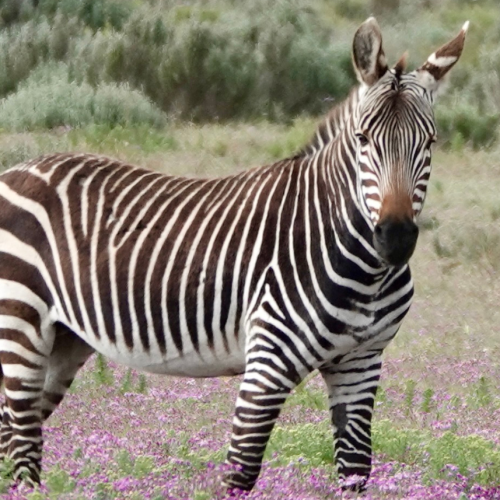
Today is largely a travel day, and if we drove direct it would take us five and a half hours. Our plan is to reach the park by late-afternoon to settle in to our accommodations. Its signature falls drops close to 200 feet in a spectacular setting that is illuminated at night. We hope to add a new mammal to our list here: Hartmann’s Mountain Zebra.
Accommodations at Augrabies Falls in the national park (B,L,D)
Mon., July 26 Full Day to Explore Augrabies Falls National Park & Vicinity
We head out to explore after breakfast, looking for raptors like Booted Eagle, which patrol the granite cliffs. Finding massive Verreaux’s Eagle is possible and while they’re not common, they do breed in the park. Klipspringer, a mammal of which this eagle preys upon the young (as well as on Rock Hyrax) is found regularly here, an antelope with fascinating adaptations in its feet to allow it move over rugged terrain with ease. Birds we may find include Rosy-faced Lovebird, Dusky Sunbird, Namaqua Dove, both White-backed and Red-faced Mousebirds, Acacia Pied Barbet, Pale-winged Starling, Karoo Thrush, Mountain Chat, Karoo Long-billed Lark, and Namaqua Warbler. This is a good area to find skinks, agama lizards, and other reptiles as well as some interesting plant life.
This expansive park is over 600,000 acres, situated along the Orange River. The gorge runs about 11 miles, with multiple viewing points we can explore. On the river below us at viewpoints we may find Black Stork, Hadada Ibis, both Grey and Black-headed Herons, African Pied Wagtail, and overhead, large and acrobatic Alpine Swift. The endemic Cinnamon-breasted Warbler (scarce) and also Short-toed Rock Thrush and Mountain Wheatear like the cliffs. In open arid terrain we look for Starks, Spike-heeled, and Karoo Long-billed Larks as well as Gray-backed Sparrowlark, Rufous-eared Warbler, Double-banded Courser, and with luck Ludwig’s Bustard.
Accommodations at Augrabies Falls in the national park (B,L,D)
Tues., July 27 Augrabies Falls National Park to Kgalagadi Transfrontier Park
We leave this morning with a half-day drive ahead of us to reach our final location of the main journey, a recently established national park shared by South Africa and Botswana. The park was established as an international peace park, merging two existing national parks across the border in 2000 and opened to the public in 2002. We enter this vast unfenced park in the Kalahari Desert from South Africa.
Desert wildlife is free to move here in an area four times the size of Yellowstone; predators and prey live out their roles in rigorous terrain stretching over 800,000 acres. Kalahari Lion are famous for lush black manes. Cheetah and Leopard are regularly seen, and we have a chance to see both Brown and Spotted hyena species here. Beauty is austere but memorable with camel-thorn acacia trees rising from red dunes lit at sunrise and sunset and wildlife herds of Eland, Springbok, Gemsbok, Red Hartebeest, and Blue Wildebeest traversing winding dry riverbeds. Twee Rivieren, the largest rest camp and administrative center at the main gate is a good birding area and surely we find Africa’s iconic Lilac-breasted Roller near here and its likely Yellow-billed Hornbill watch for food opportunities. Over 280 species have been recorded in the park, with an impressive 34 species of raptors, including massive Lappet-faced Vulture. We have a chance here to find Meerkat and Bat-eared Fox again, and with luck, possibly even Honey Badger.
We settle into our accommodations; South African Ground Squirrels chirp a warning as we approach and Yellow Mongoose are often in the parking area.
Accommodations at Twee Riverien, Kgalagadi Transfrontier Park (B,L,D)
Wed., July 28 – Fri., July 30 Three Full Days in Kgalagadi Transfrontier Park
We have three full days to explore the heart of the Kalahari: the famous Kgalagadi Transfrontier Park. We stay at Twee Riverien for four nights (either just inside the park in the government accommodation or just outside the gate at private accommodation) and this allows us three full days to explore the southern portion of the park, including at least one night drive. The famous Kalahari black-maned Lions are always a goal to see here, as are Cheetah, Leopard if we’re lucky, and in the early morning or on the night drive, we hope for the scarce Caracal and Brown Hyena, regularly seen here. Southern Oryx, or Gemsbok as they are known locally, are common, as well as Springbok herds. Birds are abundant, ranging from Secretarybird to Red-necked Falcon, Swallow-tailed Bee-eater, Purple Roller, Sociable Weaver with their giant nests, Tawny Eagle, Violet-eared Waxbill, White-browed Sparrow Lark, and many more species. The park is well known for owls, with Verreaux’s Eagle-Owl and Southern White-faced Scops-Owl being sought after.
We often stop at one of the picnic sites for a coffee and tea break, and here we find Southern Cordonblue, bright-colored Cape Starling, Lark-like Bunting, and scurrying about we can see Kalahari Tree Skinks.
Accommodations at Twee Riverien, Kgalagadi Transfrontier Park (B,L,D)
Sat., July 31 Drive to Upington | Short Flight Back to Johannesburg | Departures, OR continue on to Zambia’s incredible Kafue National Park
Our final morning is a drive to the town of Upington for a short flight back to Johannesburg in the afternoon to connect with evening flights home. Those continuing on the Kafue extension overnight in Jburg or Lusaka today, depending on flight availability.
Zambia’s Kafue National Park Post-Tour Extension
Itineraries are guidelines; variations in itinerary may occur to account for weather, road conditions, closures, etc. and to maximize your experience.
Big Cats, Wild Dogs & More! After an incredible experience in Kafue National Park in 2026, we can’t wait to return! The Busanga Plains section at the northern reach of Kafue National Park has extensive herds of large mammals; we see Roan daily, and huge numbers of Red Lechwe form the prey base for highly visible predator activity. Wild Dogs and Cheetah, Lion and Leopard can all be seen and the night drives are fantastic, hopefully adding Civet, Genet, and Serval, plus African Porcupine, night birds, and more! Birds here are also great, with numerous species of hornbills including Southern Ground Hornbill, both Crowned and Wattled Cranes, and a good variety of raptors.
Sat., July 31 : Overnight Johannesburg (near JNB airport) or Lusaka, Zambia if the evening flight from JNB is available
We arrive back in Johannesburg in the afternoon, and say good-bye to our departing friends. We leave this open until our group is confirmed, and if there is an evening flight, we hop on up to Zambia on that short flight. If not we overnight by the airport and get the first morning flight.
Accommodations at City Lodge, Johannesburg International Airport or at Wild Dog Lodge, Lusaka, Zambia (B,L,D)
Sun., Aug. 1 : Flight to Lusaka and onward to Kafue National Park
Our flight into Kafue is a charter flight in the mid to late morning pending when we arrive in Lusaka. We arrive in time to meet our guides at the local airstrip and whisk into nearby camp for lunch. Then settle into your spacious, comfortable tented cabins for a break before heading out. Here we go out about 4:00 PM after tea and stay out to do some night spotlighting in the early evening, coming back for dinner. Kafue National Park and the incredible Busanga Plains are our home for the next three full days so today is a grand sneak preview!
Accommodations at Kasonso Busanga Camp (B,L,D)
Mon., Aug. 2 – Wed., Aug. 4 : Three Full Days in Kafue National Park
We wake early each day to have breakfast by a roaring campfire; good rich coffee and tea and light fare starts us off at dawn to be out as animals, especially predators, are most active. This camp is situated with a broad view of a vast plain, and often the action occurs right around us. In 2026 we watched a pack of Wild Dogs jump the road at first light, cups of coffee in hand! Our lodge guides are knowledgeable and love what they do—they make every effort to track local Cheetahs, Lion packs, Hyena packs, Wattled Crane with young, and more. The landscape is stunning, with palm islands dotting the plains, as half of the year this location is under water! We follow various roads and water courses, looking first for mammals at peak activity and then finding a host of birds, many different from those seen in South Africa, a nice compliment to our journey.
The camp is lovely, not over the top luxury, but with ample creature comforts and wonderful food and hospitality. Mornings and evenings are brisk, with daytime temperatures warm to hot—just right!
Accommodations at Kasonso Busanga Camp (B,L,D)
Thurs., Aug. 5 : Charter Flight to Lusaka | Departures
This morning we take one last game drive, then head to the airstrip to be back in Lusaka for those connecting flights to JNB (or other routings, typically early to mid-afternoon) connecting to International departures in the evenings. If we have some bird enthusiasts that want to bird in Miombo habitat, a forest type with a number of endemic species, we can arrange that from Lusaka for tomorrow, with a night or two at the Wild Dog Lodge, to be coordinated if we have interest. (B)
Guide
Peg Abbott
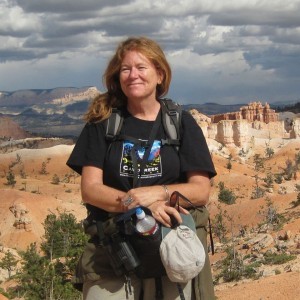
Peg Abbott is the owner and lead guide of Naturalist Journeys, LLC. She has been designing, guiding, and organizing natural history tours for more than 25 years, working for the National Audubon Society and other organizations before launching Naturalist Journeys, LLC in 1998. Her work has taken her from Alaska to Africa and Argentina, as well as many other locations around the world. She has conducted research on several bird and mammal species and keeps a close interest in Yellowstone and Mexican wolf reintroduction projects. Her interests include all aspects of natural history and geology. After 20 years in and around the Yellowstone area, Peg relocated in 2003 to the birding mecca of Portal, AZ.
Photo credit: Carol Simon
Other trips with Peg Abbott
 | North Sulawesi, Halmahera & West Papua: Birds of Paradise & MoreSeptember 8 - 27, 2027, w/Arfak Mountains extension |
 | India’s Red Pandas, Rhinos, Tigers & MoreNovember 4 - 20, 2027, w/Amur Falcon extension |
 | Brazil’s Pantanal: Jaguars! And More…August 14 - 24, 2027, w/Amazônia extensionFULL - See our 2028 departures! |
 | Eastern South Africa Birding: From the Drakensberg Mountains to the Indian Ocean Coastal PlainsFebruary 28 - March 12, 2027, w/Madikwe Game Reserve extensionOne single space left! |
 | Panama: Birds & MammalsFebruary 5 - 13, 2027 |
 | Arizona: New Year’s Birding BlitzDecember 29, 2026 - January 4, 2027FULL - See our 2027 departures! |


Cost of the Journey
Cost of the journey is per person, based on occupancy: $8490 DBL / $9090 SGL, from Johannesburg. This cost includes accommodations for 11 nights, all meals as specified in the itinerary, professional guide services, internal flights, other park and program entrance fees and miscellaneous program expenses. All tips other than your NJ guide (optional) and local guide are included (this includes tips for your driver, lodge and staff, day activities, meals and other services).
The cost of the Kafue National Park Extension extension is $TBD, estimated between $4490 DBL / $5490 SGL – $5490 DBL / $6490 SGL, and includes a private charter flight.
Tour cost does not include: transportation from your home city to and from Johannesburg, optional activities, or items of a personal nature such as laundry, telephone charges, or beverages from the bar.
Travel Details
Please plan to make air travel plans only after the minimum group size has been met. We will send you a confirmation email as soon as the trip has been confirmed.
Coming soon!
Frequently Asked Questions
This information is important for being prepared for your journey; we want you to have the best experience possible. If you only read one section, this one is key!
Ahead of Your Tour
- Make sure your passport is valid for at least three (3) months beyond your exit date from South Africa. Your passport should have at least two consecutive fully blank visa pages. See “Passports, Visas & Documents” section below for important details.
- No Visa is required for the length of this trip. If you are from another country, please contact the South African embassy website for guidelines.
- Please check current CDC recommendations for travel to South Africa and consult with your doctor about general travel vaccinations you should have as precaution for travel. See the “General Health and Inoculations” section below.
- Travel insurance in case of serious medical emergency is strongly recommended. Full health coverage and repatriation is available through Allianz Travel Insurance.
- Soft sided luggage/duffel bags are easiest for packing the vans. Pack essential medications in your carry-on luggage, as well as one day of clothing and optics in case of luggage delay.
Passports, Visas & Documents
Guidelines and regulations can change. It is always advisable to double-check the country’s documentation requirements 60-90 days ahead of traveling. Information for U.S. citizens can be found at https://travel.state.gov/content/travel/en/international-travel/International-Travel-Country-Information-Pages.html. If you are from another country, please contact the tour destination’s embassy website for guidelines.
Passport: Make sure your passport is valid for at least three (3) months beyond your exit date from South Africa. Your passport should have at least two consecutive fully blank visa pages. Please check that expiration date! You must have at least two consecutive blank pages per entry stamp, not including endorsement pages. The blank pages need to say “Visas” at the top. Pages marked “Amendments and Endorsements” will not be accepted.
Additional: You will need proof of a return ticket. You are advised to bring your contact list of hotels for entry points where that information is requested.
Visa: At the time of writing, a tourist visa is not required of US citizens for stays the length of this tour.
TRAVEL TIP: As a precaution in case of lost or misplaced documents you carry on your person during travel, we highly recommend you keep hard and digital backup copies on your phone (either photo or PDF scan), as well as a hard copy left with your emergency contact at home. The recommended important documents to copy include, but are not limited to; your passport ID page, travel visa, the front and back of your credit card(s), the airline barcode on your luggage. This will greatly expedite getting new ones if necessary – we hope everyone will always keep travel documents close so that losing them will not be an issue.
General Health & Inoculations Information – Be Prepared!
Health requirements for entry to any country can change. It is always advisable to double-check the country’s health requirements and recommendations 60-90 days ahead of traveling. Also, in case there are any that require follow-up inoculations or time to become effective before your departure. A helpful website for planning is the Centers for Disease Control and Prevention (CDC) website (https://www.cdc.gov) or by phone (800) CDC-INFO or (800) 232-4636.
We will share your health information with your guide. This information will be kept confidential but is very important as we want to be best prepared in case of medical emergency.
Vaccinations: Please bring your up-to-date vaccination records with you. The CDC recommends that all travelers be up to date with routine vaccines and basic travel vaccines (such as Hepatitis A and Typhoid, etc.). Consult with your doctor for recommendations at least 4- 6 weeks before departing on your trip, as some vaccines may require more than one dose and time to become effective prior to your departure.
Yellow fever: Proof of vaccination for yellow fever is required IF travel originates or transits through WHO-designated yellow fever countries. If you already have a yellow fever (YF) vaccination card, by all means bring it. Speak to your doctor about whether getting the YF vaccination is right for you. See countries with risk of yellow fever virus (YFV) transmission.
Preventing Malaria: Prevention is essential no matter what level of risk, but for areas with a high risk of malarial transmission we recommend you do not take any chances. While much of South Africa is considered low-to-no risk for malaria, Kruger National Park is in a malaria zone. Risk is highest from November to March but it can be a factor at any time. While consulting with your doctor about travel vaccinations, be sure to ask about taking anti-malarial medication if you will be in an area where the risk for malarial transmission is high. If you do opt for preventative medication (see choosing a drug to prevent malaria), you will need to start taking this medicine multiple days before your trip, as well as during and after your trip. Consult with your doctor what is best for you. In addition to taking anti-malarial medication, during your outings, be sure to apply insect repellent) on any exposed skin as directed! For clothing, see Packing List for our recommendations. Information about Malaria can be found at https://wwwnc.cdc.gov/travel/yellowbook/2024/infections-diseases/malaria.
Prescriptions: It is a good idea to pack any meds you take regularly in your carry-on luggage. Bring an extra pair of your prescription glasses or contact lenses. Bring an adequate supply of any prescription medications you use, a copy of the prescription and a list of generic names of your medicines as “back-up” in case it is necessary to purchase drugs while abroad. Your doctor may also recommend some prescription medications to bring with you to treat possible illnesses that might occur, depending on your destination, such as an anti-malarial medication or an antibiotic. You’ll want to keep all medications in their original, labeled containers.
Allergies: To be prepared for environmental triggers to allergies or breathing difficulties, please bring your allergy and/or asthma medication(s). If you have severe allergies talk to your doctor about carrying an EPI pen and notify your guides. It is also recommended to carry with you an up-to-date record of known allergies, chronic medical problems and Medic Alerts so that, if necessary, emergency treatment can be carried out without endangering your health.
Common Ailments: We recommend that you bring a travel-sized first aid kit and a supply of standard over-the-counter medications for prevention or treatment of common ailments (such as diarrhea, constipation, stomach upset, cough, congestion, head or body aches, motion sickness, insect bites and sunburn); as well as ointments, moisturizer, sunscreen, oral rehydration salts, band-aids, moleskin for blisters, cotton swabs, nail clippers, and tweezers, etc.
Altitude Illness: According to the CDC's website, day trips to high-elevation destinations less than 8000 ft. with an evening return to a lower elevation are much less stressful on the body, depending on the time provided for your body to adjust. However, overnights at higher altitudes may have more adverse effects on your body and you should be informed about altitude illness and Acute Mountain Sickness (AMS) (see CDC's information for Altitude Illness). The most general symptoms are headache and occasionally fatigue and dizziness. You’ll want to take it easy, particularly at first. The likelihood of these symptoms can be reduced by resting, drinking plenty of water, avoiding alcohol, and taking aspirin. In addition, we will optimize acclimatization by adjusting itineraries to avoid going “too high too fast." If you have worries about the altitude, ask your physician about medications (such as Diamox) that may be right for you.
Weather & Climate
South Africa has been in a long drought cycle, but your visit does coincide with spring, and you may have rain on either portion. Locals will be very happy if you do! Your guides know the area very well and will adjust accordingly – the boat tour is the most sensitive activity for scheduling.
The Cape portion has a Mediterranean climate, with daytime temperatures in the mid-60’s°F and evenings mid-50’s°F. Kruger will be hotter, with temperatures into the mid 80’s°F by day, similar mid-50’s°F at night. The pelagic trip can be windy and cold, so you will appreciate having brought a good, waterproof outer layer!
You may want to check your favorite weather information website for forecasts and predictions closer to your date of travel. Visit https://www.climatestotravel.com for an overview. See "Packing List" for suggestions for packing for variable weather.
Annoyances & Hazards
Follow all advice and instruction from your guides.
Avoid panhandlers/beggars/street merchants who approach you.
We do not expect large numbers of insects, but if there is humidity, there may be some, so long sleeves, long pants, and insect spray containing 20 – 30% DEET recommended. They make wipes now that are very handy for quick application. Please, do not apply sunscreen or insect repellent inside the vehicles.
Your guide will go over all the other biting (and exciting) critters to avoid when you arrive - most are rare finds. It is also important to remember that in Kruger National Park there are many large predators, so always follow your guide’s directions carefully and thoroughly when in the field and at the lodges. They will not let you out of the vehicles often in lion country – one termite mound can hide a full-grown male! We also take precautions around elephants, but you will be able to get wonderful photos and have a sense of being very close.
The sun is also very strong, so plan to protect yourself against it.
Tips from the U.S. Embassy:
- Crime is very high in South Africa.
- Traffic drives on the left. Traffic death rates are much higher than in the United States.
- Wild animals have injured and killed tourists. Follow all park rules and instructions from guides.
- South Africa experiences scheduled blackouts called “load shedding.”
Food & Drink
Menus at lodges and restaurants offer a delicious variety of regional flavors, sustainably based on the wonderful local ingredients available, and delightfully prepared in a sanitary environment. As with any case when traveling, we urge you to consider what your body is used to before you eat something. Trust your common sense when consuming food and beverages. This is the best way to avoid any unwanted problems. If you plan to eat out on your own, ask for recommendations from your hotel or refer to a guidebook such as Frommers.
One of the many ways we strive to do our part for the environment is by intentionally reducing our consumption of single use plastics (such as bottled water), so we appreciate you bringing a reusable water bottle. Purified drinking water will be made available to refill your bottle, however, bottled water will be available for field trips where refilling your personal bottle is not an option.
There are some great reusable water filtering bottles on the market today that are great for travels abroad. We encourage you to invest in one (such as Lifestraw or GRAYL Ultrapress or SteriPen). A little research will be well worth the effort to reduce the reliance on single-use plastics in the case that purified water refills are not readily available.
Packing, Clothing & Laundry
See “Packing List” tab for more detailed information and checklists, but in summary, we emphasize that you pack light in soft-sided luggage (easier to load in vans and charter planes), plan for dressing comfortably in layers (for managing varying conditions in any given day), and please pack your personal medication, travel documents, optics, and other essential items in your CARRY-ON, not in your checked luggage. Laundry services are available at most lodgings for an additional fee, but be prepared to hand launder if you need to.
Spending Money
People often ask how much spending money to bring. Part of the answer depends on how much you want to shop. The lodges will have small gift stores and may charge for Wi-Fi. Most will let you run a tab if there multiple nights and plan on a mix of accepting credit cards and needing payment in cash. Sodas at a restaurant run about $3 as does beer, wine will be more. One soda is typically included with a meal on your safari, or water, and otherwise beverages from the bar are billed to you. Water is carried on all the field excursions.
The official currency of South Africa is the Rand (R). For the current exchange rate, please refer to online converter tool like www.xe.com or your bank. We advise you carry a mix of different types of payments, such as the local currency, an ATM card, and a credit card.
We recommend you exchange some currency into South African rand through your bank or an exchange office before you leave; at least enough to cover one or two days. It will helpful to arrive with some local currency just in case you run into an “out of order” ATM or a local bank holiday. Other possible exchanges can be found at your departing airport in the U.S., a travel agent, or an AAA office. U.S. dollars are not an accepted form of payment in South Africa; you will need rand instead. Tips for guides at the tour end are best in rand, but in a pinch, they can accept USD.
You can also exchange your money in South Africa. The easiest way is to withdraw funds from a local ATM. ATMs are widely available throughout South Africa, especially in larger cities like Johannesburg and Cape Town. There is even an ATM in Kruger National Park. You will be able to change money after your arrival at the airport if arriving in Johannesburg at the ATM or exchange outlet. As you are in and out of the airport (for the flight to Kruger) you can restock there as well. ATMs will typically offer you the best exchange rate. The ATM will give local money and your bank will convert that into U.S. dollars. Many banks charge a fee of $1 - $5 each time you use a foreign ATM. Others may charge you a percentage of the amount you withdraw. Check with your bank for departure. You must become familiar with how to use your ATM card and PIN number ahead of the journey. Some hotels can also change money. If you plan to exchange cash in country, bring large U.S. bill ($50 or $100) in good condition that will give you the better rate when exchanging to local currency.
Credit card usage is common in South Africa. We suggest you have more than one card available. You may want to bring more than one brand of card (one Visa, and one MasterCard; American Express is less accepted), if possible. Not every shop will accept every card. Some smaller shops and restaurants require cash, so it is always a good idea to ask before making a purchase. Also, we recommend that you advise your bank or credit card company that you will be traveling to South Africa to avoid questions, card freezes, or charges. If you have a choice of cards, bring one with no foreign exchange fees.
Traveler’s checks are not widely accepted. They can be difficult to exchange. We do not advise you use them.
Gratuities
We hope that you will be pleased with all professional services offered on this tour. All tips, with the exception of your NJ guide (optional) and local guide(s), are included in the cost of this tour (this includes tips for your driver, lodge and staff, day activities, meals and other services).
Tipping your guide(s) to show your appreciation is entirely at your discretion and should reflect your level of satisfaction of the service provided. If you wish to offer a tip, know that they appreciate anything you care to give. Of course, you are welcome to give more in recognition of exceptional service. Here is a guideline for tipping your NJ and local birding guide(s):
- US $10.00 - $15.00 per day, per guest. Note: If there is more than one guide, this can be split among them.
*Please note that these suggested tips are quoted in U.S. Dollars. You will want to convert and tip in local currency.
Cell Phones & Internet Service
Cell phone coverage is generally good in South Africa. You can either roam with your own phone (check your carrier’s international plan) or buy a SIM card at the airport to insert in your mobile phone. Make sure if you do NOT want to use your cell phone that you turn off cellular data. Putting your phone in airplane mode if you mainly use it for photos will save the battery as well.
Electricity
South Africa plugs are 220 Volts at 50 Hertz. You will need an adapter for the plug type, and to make sure your devices can be used with 220 Volts (or bring a converter). South Africa has three-pin, Type M round plugs. Adaptors can be purchased ahead of time, and are generally available at major airports. More information can be found at www.power-plugs-sockets.com.
Time
South Africa is GMT + 2. A handy website to do a quick conversion is www.timeanddate.com.
Questions?
Please contact Naturalist Journeys by email at clientservices@naturalistjourneys.com or telephone at our office: (866) 900-1146 if you have any questions. Many thanks for traveling with us and we hope you enjoy your journey!
Pace of the Tour & What to Expect
You will receive a Schedule-at-a-Glance and list of hotels (our eContact List) a few weeks before your departure. This will serve as an outline for each day and alert you to any recent changes made in the schedule or to our hotels, if needed.
Our journeys are set up to follow the rhythm of nature. Our focus is on birding and nature; we offer full, well-planned field days and often get up early for that magical time around dawn. We generally follow the published itinerary, but we stay flexible to the weather, wildlife opportunities and the interests of the group. Your guide will keep you apprised of the next day’s schedule at each evening meal, noting what to bring and what to prepare for. Questions and/or concerns are welcome.
The pace of our Naturalist Journeys tours is moderate; to fully participate you should be able to get in and out of vehicles several times a day, and walk 1-3 miles over uneven terrain. It is important to participate with a flexible attitude as adjustments may be made in our schedule to make the most of our time in the field or for other purposes at your guide's discretion. We are not a “listing” bird company that drills down on target species, but at times we do wait for those special species unique to the places we visit. During the day, we take time to stop for photos and for educational opportunities to learn about conservation projects, landscapes, and geology. We appreciate other taxa as well as birds, with mammals often the biggest draw but plants and butterflies are also very popular. Our clients often lend their own expertise to the mix.
We like to make meals a fun and memorable part of the experience, too. Breakfasts are often at hotels, and we carry snacks, fruit, and water in the vans each day. Lunches are a mix of picnics in the field (weather dependent) and a chance to dine with locals at small cafes and restaurants. For dinner, we pride ourselves in our homework to keep up with the best choices for dining, choosing restaurants with atmosphere that specialize in local foods. On occasion we keep dinner simple to go back out in the field for sunset wildlife viewing or night walks. In some remote locations, our choices are limited. If you are tired, room service for dinner may be an option you can choose.
Naturalist Journeys International Trips: Guide Role
Naturalist Journeys supports ecotourism and the development of excellent local guides. Once we know our international partners and guides well, we can send out small groups working directly with these trusted partners, adding a Naturalist Journeys guide to assist the local expert when we have a group of 6-7 or more. This helps us keep your costs down while retaining tour quality. The local guide is your main guide. You can expect your Naturalist Journeys guide to be well-researched and often they are experienced in the destination, but their role is not to be primary, it is to help to organize logistics, help you find birds, mammals, and interesting other species in the field, keep reports, help facilitate group interactions, and to keep the trip within Naturalist Journeys' style. Local guides live in the countries we travel to, know the destinations intimately, and are often the strongest force for conservation in their countries. They open many doors for us to have a rich experience.
Smoking
Smoking is not permitted in any vehicle or in any situation where the group is participating in an activity together, such as a vehicle excursion or a guided walk. Please respect all designated smoking areas at hotels and restaurants.
Transportation
As a courtesy to each other, we ask that all travelers please rotate seating. On international trips we may all be in one small bus, on some trips we are in vans, particularly the roomy Sprinter Vans when available. Some areas require us to be in smaller 4-wheel drive or safari vehicles. Rotation allows you to sit with different drivers and alternate front and back seating.
Photo Release & Sharing
We take many group photos and will share photos with the group. And after your tour, we will organize a chance to share photos via Dropbox or Google Photos. Please note that this is our policy and if you prefer to be excluded, we need to know ahead of your tour.
By registering for this tour, you agree to grant to Naturalist Journeys and its authorized representatives’ permission to record on photography film and/or video, pictures of my participation in the tour. You further agree that any or all of the material photographed may be used, in any form, as part of any future publications, brochure, or other printed materials used to promote Naturalist Journeys, and further that such use shall be without payment of fees, royalties, special credit or other compensation.
Travel Insurance
You are traveling in remote areas. Naturalist Journeys strongly recommends you have full medical and evacuation insurance from a company such as Allianz, for all international travel. If you do not have medical coverage or evacuation coverage on your existing travel insurance policy or for some reason elected not to take that out, we advise getting an evacuation plan with Global Rescue, World Nomads, Medjet, Allianz (they can do evacuation only) or a similar company. These plans are typically $300-$400 for a year for multiple destinations. This coverage may be a part of a larger Travel Insurance policy but can also be purchased on its own.
Questions?
Please contact Naturalist Journeys by email at clientservices@naturalistjourneys.com or telephone our office: (866) 900-1146 if you have any questions. Many thanks for traveling with us and we hope you enjoy your journey.
Please Pack Light!
Luggage: Soft-sided luggage is much easier for us to pack in vehicles or charter aircraft than a more rigid hard sided piece, so if you have the choice, please use your soft-sided luggage. Be sure to have your name and address on the inside of the bag, as well as on the luggage tag on the handle. It is our hope that you can pack in one checked bag that does not exceed 45 pounds. Please reconfirm your airline’s baggage weight and size restrictions about a week or so before departure.
Delayed Luggage: Imagine NOT getting your checked bags upon arrival! Therefore, DO NOT pack any essential medications, vital optics (binoculars, camera, eye-glasses), or essential travel documents in your checked luggage! Pack these and other essential items in your carry-on bag and on your person (i.e. under-garment pouch). You will want a day pack for field trips, so this makes an ideal carry-on. Another suggested tip is to travel wearing your most important shoes for the field and have one day’s clothing change (including a change of underwear!).
Weather: Pack clothing that is appropriate for the anticipated temperatures and conditions (See “Weather & Climate” section in Essential Information). You may check your favorite weather website, such as www.weather.com, closer to your departure to better predict what the weather will be upon arrival. You may also visit https://www.climatestotravel.com for more regional information by month.
Dress: Plan to dress comfortably and informal throughout the trip. Dressing in lightweight layers is the best way to provide options to get you through a day of varying weather and temperatures comfortably. Lightweight long sleeve shirts and long pants make ideal field clothing as they are more protective from sun, vegetation and pests. Also, choose clothing you don’t mind getting dirty or muddy and things that are loose-fitting, comfortable, and easy to layer and launder. Quick-dry fabrics are ideal. A lightweight and waterproof outer layer is essential as well as comfortable hiking footwear. Fabrics like fleece, as well as rain gear, will protect you from rain and wind and keep you warm. It is important to have a warm jacket when the tour includes cooler temps and/or higher elevations.
Laundry: There will be laundry services available at some (but not all) of the tour’s hotels and lodges – we will try to note this on the hotel contact list sent out about 30 days ahead of your tour. Hand laundering can be done in your room, so you may wish to pack clothing that is easy to hand wash and quick-drying.
Treating your clothing to better protect you from insects: It is possible to purchase Permethrin spray (online or from REI) to treat your field clothing and socks before your departure. Another approach is to purchase field clothing permeated with insect repellent such as the Craghoppers Insect Shield collection.
Note on clothing colors: We recommend muted colors of tan, brown, khaki, grey or green, as they are spotted less easily than white or bright colors, though camouflage clothing is not recommended.
Valuables: WE DO NOT RECOMMEND TRAVELING WITH PRECIOUS OR VALUABLE JEWELRY – don’t tempt anyone and don’t bring things you’d regret losing, and your mind will be at ease!
Clothing & Gear
- Lightweight long pants, 2-3 pair
- Lightweight long-sleeved shirts, 2-3
- Shorts (optional)
- T-shirts or equivalent (3-4 – remember you are very likely to buy one or more)
- Personal underclothing (consider what dries fast if you plan to do some laundry)
- Sleepwear
- Socks (lightweight, and easy to hand wash and dry)
- Raincoat or poncho (great if this doubles as a windbreaker)
- Lightweight jacket (fleece is ideal, but a sweater or woolen layer will do)
- Comfortable evening clothes (clean field clothes are appropriate, but feel free to be dressier if you wish)
- Bathing suit (optional)
- Hat with broad brim – a safari style hat with a tie-down is great for time in the vehicles
- Bandana (optional, great for cooling off when hot and sweaty, or as a camera dust cover)
- Comfortable walking shoes with thorn-proof tread (such as tennis shoes); best is a comfortable pair of lightweight hiking boots
- Comfortable sandals or light shoes for evenings, travel days (optional)
- Field vest (optional) These are incredibly handy in the vehicle when you are searching for field guide, camera chip, pocket camera, lip balm. A great source is Big Pockets
- Belt, if needed for pants
- Bandana (cloth or gel; great for cooling off when you are hot and sweaty, optional)
Equipment & Miscellaneous
- Photo identification (Real ID for US citizens) - name should match your passport to avoid issues with confirming your identity
- Airline tickets or E-ticket verification
- Passport and visa (if required)
- Travel insurance info
- Money & credit cards
- A secure pouch to carry the items above on your person at all times (such as a secure, under-clothing document pouch)
- As a backup: copies of all the above (phone and/or paper) packed in a separate location than on your person, plus a set given to your emergency contact at home as a backup. For passport, copy of the ID and entry stamp pages.
- Small daypack or fanny pack for carrying your field gear
- Binoculars
- Cell phone and charger
- Camera and charger/extra batteries, memory cards/film, lens cleaning supplies and instruction manual (optional)
- Spotting scope and tripod (optional – guide will have them)
- Tablet/laptop for personal use and/or transferring photos, USB stick, USB cord and charger (optional).
- Rechargeable power bank (optional)
- Electricity converters and adapters for 2-to-3 prong electronics plugs if needed (See "Electricity" under "Essential Information")
- USB cord for transferring photos from camera to tablet/laptop (optional)
- Portable external hard drive if you intend to take many photos (optional)
- Umbrella
- Flashlight or headlamp with fresh batteries
- Alarm clock (or use your cell phone)
- Sunscreen/Chapstick with sunblock
- Sunglasses with a neck strap
- Insect repellent (containing DEET), if not, then Picaridin, OLE, etc. Use as directed! Sulfur powder for chigger bites if available
- Travel-sized laundry soap (consider laundry soap "sheets" that pack flat, and are lightweight and environmentally friendly)
- Toiletry articles. In this land of thorns, tweezers may come in handy!
- Tissues
- Walking stick (optional but recommended if you regularly use one or if you plan to hike)
- Ziplock-type bags are good for organizing storage and the two-gallon size can be helpful protection from dust with your optics
- Dust cloth (or clothing item) to wrap optics in while on safari
- Reusable water bottle to refill during the journey - we do try to save on plastics!
- Notebook and pen or journal (optional)
- Field guides (optional)
- Earplugs (if hotel noise or roommates snoring may bother you; these are optional)
- Small sewing kit
- A collapsible airplane footrest (such as an inflatable, foldable, or hammock type) may help make longer flights more comfortable. Some airlines may have restrictions, so confirm with your airline which types are allowed and where they may be not allowed, i.e. bulkhead or exit rows (optional)
Medical & First Aid Items
- Health insurance
- Vaccination records
- Personal Rx medications (in their original labeled prescription packaging)
- Extra pair of eyeglasses or contacts (with plenty of wetting and cleaning solution)
- Copy of eyeglass prescription, medical prescriptions, and any medical alerts
- Epi-pen if needed for allergic reactions (include prescription label)
- Altitude illness meds (such as Diamox) if likely to be needed
- Motion sickness preventatives if likely to be needed on bus, van, boats, etc.
- Personal first aid kit and medications for general ailments, colds and stomach ailments, etc. (Imodium or Lomotil, antihistamine cream or tablets, eye drops, antibiotic ointment, Band-Aids, moleskin to protect against blisters, etc.)
- Foot powder, lotions, general “comfort” items
- Hydrocortisone cream to ease itching from insect bites
- Hand sanitizer and/or hygienic cleansing wipes
- For Malaria risk areas Anti-malarial prophylactics and antibiotic prescription in case of infection, prescribed by your physician
There are many titles of interest for South Africa; the following are a few that we have enjoyed that can get you started.
Top Picks
Merlin App – South Africa Pack. A phone-based birding app from Cornell University Laboratory of Ornithology. Before departing the U.S., download the app for free, then from within the app, download the “pack” for South Africa.
Firefinch app - "A fun and beautifully designed guide to the birds of Southern Africa, with illustrations, photos, sounds and articles." There are 3 versions: Firefinch Lite is free, but limited; a Pro version; and now they have an app specifically for Kruger National Park called "Kruger Birding by Firefinch." Download it from your favorite app store. You may also visit https://www.firefinchapp.com/, then from within website, find the link to download the version of your choice.
Field Guides
The Safari Companion: A Guide to Watching African Mammals
The Wildlife of Southern Africa: A Field Guide to the Animals and Plants of the Region
The Kingdon Field Guide to African Mammals
The Kingdon Pocket Guide to African Mammals
Field Guide to the Wildflowers of South Africa
Sasol's Larger Illustrated Guide to the Birds of Southern Africa
Species Profiles
Giraffe: Biology, Behaviour and Conservation
Lions in the Balance: Man-Eaters, Manes, and Men with Guns
The African Wild Dog: Behavior, Ecology and Conservation
Elephant Memories: Thirteen Years in the Life of an Elephant Family
Note: Query any animal of interest (Wild Dog, Lion, Giraffe) and there will be more titles. These are just a few of the many out there. Also, there are SO MANY DVD’s on African wildlife, go browse and enjoy. It’s a really great way to prepare for your tour.
History & Culture
Island Africa, The Evolution of Africa’s Rare Animals and Plants
The South Africa Reader: History, Culture, Politics
Long Walk to Freedom: The Autobiography of Nelson Mandela
Your guide will also have a selection of reference books and materials for participants to share. As an Amazon Associate, Naturalist Journeys earns from qualifying purchases, and may get commissions for purchases made through links on this page at no added cost to you.
General
Nature, Wildlife & Biology
Endemic Animals of South Africa
Kruger National Park Guide: Explore the links on the left-hand side to see more!
Whales and Dolphins of South Africa
Conservation, Parks & Reserves
Kirstenbosch National Botanical Garden
Birding West Coast National Park
Geology & Geography
Geological History of South Africa
Geography of South Africa
History & Culture
Cape Town: A South African Historically Significant City
Modern History of Kruger National Park
South African Cuisine - Encyclopedic Overview
Helpful Travel Websites
Transportation Security Administration (TSA)
U. S. National Passport Information Center
U.S. Customs and Border Protection (CBP)
U.S. Department of State, South Africa International Travel Information – South Africa
Center for Disease Control (CDC) – South Africa
Canada Travel Advice and Advisories for South Africa – South Africa
Travel Health Pro (UK) – South Africa
Items of Note
Tour Pace
We walk quite slowly and stop often. At Kruger National Park, wild animals preclude excursions on foot. Comfortable walking shoes are adequate for this tour.
Group Size
The minimum group size is 6 with our local expert guide; with 8 or more Naturalist Journeys sends a second guide. The maximum number of participants is 10.
Other Trips You May Like
Designed to pair with Namibia.