May 7 – 19, 2027
A Private Tour for Saw Mill River Audubon
-
Contact SMRA for pricing
-
Heathrow Airport (LHR)
-
Heathrow Airport (LHR)
-
A Birder’s Pace
We walk at a birder’s pace, fewer than four miles a day, with breaks along the way.
Discover the best of England on this immersive birding and nature journey from London to the Dorset coast. We explore a remarkable succession of wetlands, marshes, woodlands, heathlands, and coastal reserves, timing our visit for the vibrant breeding season of May. From the renowned birding sites of Cley, Minsmere, Dungeness, and Portland Bill to the tranquil landscapes of New Forest and RSPB Arne, we’ll seek an impressive variety of British birds, including Nightingale, Eurasian Spoonbill, Lesser Spotted Woodpecker, Nightjar, and Dartford Warbler.
Birding is only part of the story. Along the way, we experience the character and history of England through charming towns, magnificent estates, medieval castles, and remarkable maritime landmarks. Stroll the cobbled streets of Holt and Rye, explore Canterbury Cathedral and Colchester Castle, visit Dover Castle and Portsmouth Historic Dockyard, and admire the dramatic ruins of Corfe Castle. With excellent birding, beautiful countryside, and centuries of history woven throughout, this is a wonderful way to experience the natural and cultural treasures of southern England.
Highlights
- Explore renowned birding sites including Cley & Salthouse Marshes, RSPB Minsmere, Dungeness, Pagham Harbour, Portland Bill, and RSPB Arne.
- Search for sought-after species such as Eurasian Spoonbill, Nightingale, Lesser Spotted Woodpecker, Nightjar, Dartford Warbler, and Stone-curlew.
- Watch marshland and coastal birds from the River Waveney, with opportunities for Western Marsh Harrier, Cetti's Warbler, and other wetland species.
- Wander through quintessential English towns including Holt, Blakeney, Southwold, Aldeburgh, and medieval Rye.
- Discover England's rich history at Canterbury Cathedral, Dover Castle, Colchester Castle, Portsmouth Historic Dockyard, and Corfe Castle.
- Experience the landscapes of New Forest National Park and Dorset, where heathlands, woodlands, and rugged coastline provide a memorable finale to our journey.
Trip Itinerary
Itineraries are guidelines; variations in itinerary may occur to account for weather, road conditions, closures, etc. and to maximize your experience.
Fri., May 7 Arrivals in London
Welcome to London! Please plan to arrive at your leisure today and make your way to our hotel by taxi or the Heathrow Express. We encourage you to arrive in time to join the group for dinner at a favorite London restaurant. During the evening, Anne reviews our train travel plans for tomorrow morning, and we have the chance to get to know our fellow travelers as our adventure begins.
Accommodations in London (D)
Sat., May 8 Train to Norfolk | Exploring Local Towns
After breakfast, we pack up and depart London by train, enjoying the three-hour journey to northern Norfolk. Upon arrival, we are met by our local guide and driver before setting out for a relaxed afternoon exploring the historic market town of Holt.
Holt is a quintessential English town, known for its elegant 18th-century Georgian architecture, independent art galleries, bookshops, antique stores, and inviting cafés tucked into charming courtyards and side streets. From the bustling marketplace, a beautiful tree-lined avenue leads to the 13th-century Church of St. Andrew. A fun feature for our group is the Holt Owl Trail, a series of Barn Owl markers embedded in the pavement that guide visitors to many of the town’s historic landmarks. Throughout our stroll, the familiar calls of Woodpigeon provide the soundtrack to our days in England, while we watch for Grey Heron, soaring Common Buzzard, colorful Eurasian Jay, Common Magpie, Eurasian Jackdaw, several species of tit, and, of course, the charming European Robin.
If time allows, we may also visit the coastal village of Blakeney, nestled within an Area of Outstanding Natural Beauty. Here we can explore the Blakeney National Nature Reserve, a spectacular stretch of unspoiled coastline renowned for its scenic walking trails, thriving Common and Grey Seal colonies, and excellent birding. Along the shoreline we search for Greater Ringed Plover, Eurasian Oystercatcher, multiple species of geese, and a variety of shorebirds (waders) and waterfowl.
This evening, we gather over dinner at a local restaurant to review our first checklist of the trip.
Accommodations in North Norfolk (B,L,D)
Sun., May 9 Cley & Salthouse Marshes | Felbrigg Hall & Woods
Today we enjoy a full day exploring the natural and cultural treasures of Norfolk. After breakfast, we make the short drive to Cley-next-the-Sea, just a few miles from Holt and Blakeney. Once a haven for smugglers and a grazing area for local racehorses, the village is now best known for its outstanding birding.
Our morning is spent at Cley & Salthouse Marshes, a long-protected network of salt marshes, lagoons, and beaches that has been managed as a breeding bird sanctuary since 1926. The award-winning visitor center features exhibits, a café, gift shop, and excellent orientation to the reserve before we head out onto its extensive boardwalk and trail system.
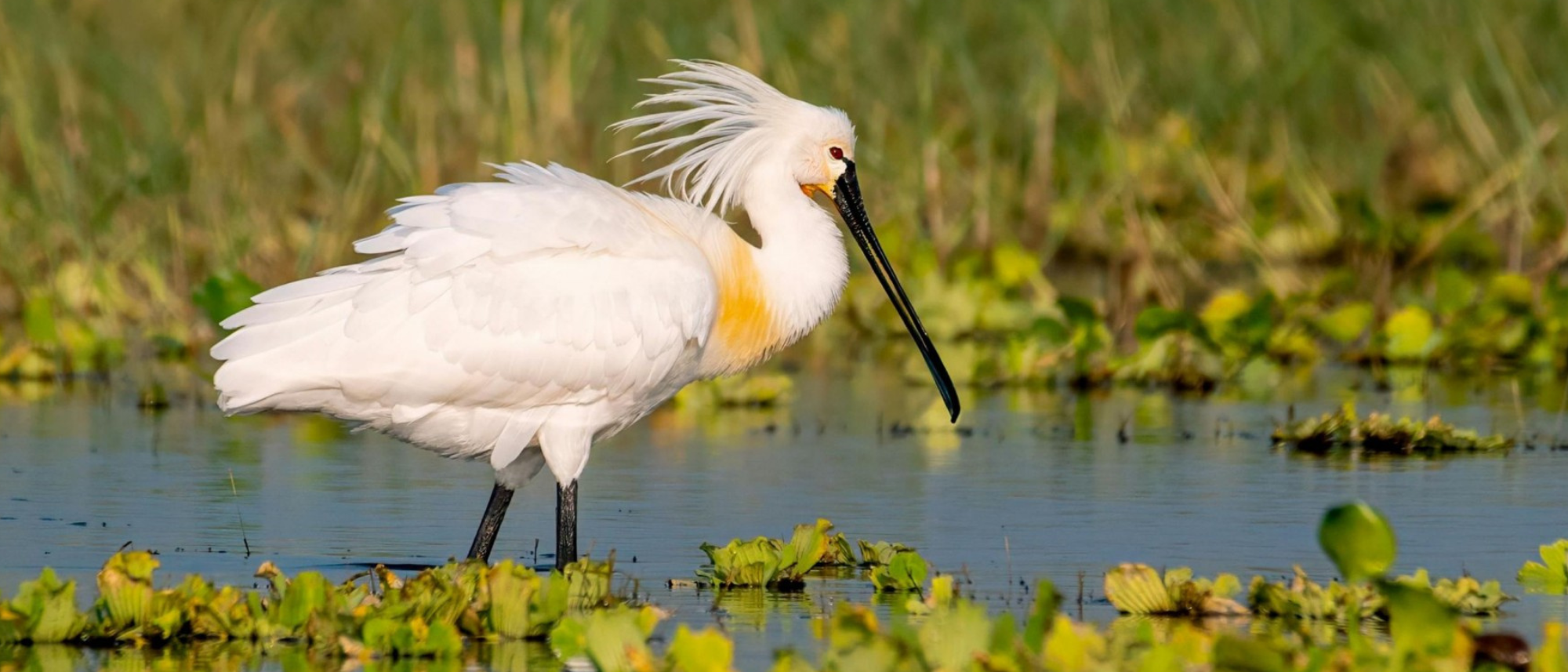
Waterfowl are abundant here, giving us plenty to sort through, including Tufted Duck, Common Pochard, Northern Shoveler, Brant, Mute Swan, and many others. Six well-positioned hides provide close views of the reserve’s diverse habitats, where we search for Water Rail, Pied Avocet in breeding plumage, Eurasian Bittern, Eurasian Oystercatcher, European Golden-Plover, redshanks, numerous gulls, and raptors such as Western Marsh Harrier, Red Kite, and Eurasian Kestrel. Our prize species this morning is the elegant Eurasian Spoonbill.
This afternoon we shift gears for a pleasant cultural excursion—binoculars still at the ready. A short drive inland brings us to Felbrigg Hall & Woods, a magnificent 17th-century country estate managed by the National Trust. We enjoy a leisurely walk through the ancient woodland in search of Common Firecrest, Great Spotted and Eurasian Green Woodpeckers, Great and Eurasian Blue Tits, Eurasian Nuthatch, possible Eurasian Treecreeper, wagtails, and more. Towering beech, oak, sweet chestnut, hawthorn, and sycamore surround us as we wander through the 380-acre Great Wood, and we may also spend time in the beautiful walled garden near the main house.
Felbrigg Hall is celebrated for its remarkably preserved interiors and fascinating history. Although the estate dates back to 1086, much of the impressive south façade seen today was built by the Felbrigg family in the 1620s, creating one of England’s finest Jacobethan country houses.
Over dinner this evening, we share our favorite sightings of the day before reviewing our growing bird list.
Accommodations in North Norfolk (B,L,D)
Mon., May 10 Suffolk Coast | Marshland Cruise | Exploring Coastal Towns
Early risers may wish to enjoy breakfast followed by some birding around the hotel before we bid farewell to Norfolk and head south to the Suffolk coast. Our scenic 90-minute drive brings us to the coastal town of Lowestoft, where we board the mid-morning River Waveney Sightseeing & Marshland Cruise.
This leisurely cruise offers excellent opportunities to observe Western Marsh Harrier, Cetti’s Warbler, Eurasian Reed Warbler, Common Reed Bunting, and other marshland species. In May, blooming yellow waterlilies add a splash of color to the tranquil waterways. After our cruise, we visit Lowestoft Ness, the easternmost point in England. This productive coastal site offers opportunities to see breeding Black Redstart, Eurasian Oystercatcher, Ruddy Turnstone, a variety of gulls, and, with luck, Northern Gannet.
This afternoon we enjoy a relaxed visit to one of Suffolk’s charming seaside towns, perhaps Southwold or Aldeburgh. Both feature attractive promenades, independent shops, and lively high streets that invite leisurely exploration. Take time to browse the local boutiques, enjoy a warm drink, or simply soak up the atmosphere before we continue to our hotel to check in, unpack, and relax before dinner.
Accommodations in Suffolk (B,L,D)
Tues., May 11 RSPB Minsmere | Landguard Point | Colchester Castle | Westleton Heath
Today begins with an early start as we head to the renowned RSPB Minsmere Reserve. Our first objective is to search for Nightingale in the chapel field gorse, along with the distinctive Stone-curlew on the heathland margins. Minsmere’s extensive network of trails winds through reedbeds, shallow lagoons, heathland, and wet grassland, much of it maintained by grazing ponies. Otters, Water Voles, possible adder, and numerous butterfly species add to the reserve’s remarkable diversity.
This afternoon we travel south to Landguard Point for a relaxed coastal walk past the historic lighthouse. As we learn about the lighthouse’s fascinating history, we watch for Black Redstart, Lesser Whitethroat, Red-legged Partridge, and a variety of waterfowl, shorebirds, and gulls along Suffolk’s southernmost coastline. Nearby stands Landguard Fort, another reminder of the area’s rich maritime past.
Very exciting in the Suffolk area is the recent announcement that Zitting Cisticola has successfully bred in a local marsh. There have been 11 birds identified, with at least 7 juveniles from three recent broods.
From here we continue inland to impressive Colchester Castle. Built during the second half of the 11th century, this Norman fortress boasts the largest Norman keep in Europe. We have time to explore its exceptional museum collection, and those interested may climb the Grand Stairs for sweeping views across Colchester. Around the castle grounds we keep watch for Gray Wagtail, Cole Tit, sparkling Common Kingfisher, and the ever-present European Robin.
After dinner this evening, we head to a nearby heathland for a special dusk excursion to witness the remarkable churring display of Nightjar as the males perform their evening courtship flights. Following this memorable experience, we return to our comfortable accommodations for the night.
Accommodations in Suffolk (B,L,D)
Wed., May 12 Suffolk to Kent | Stodmarsh NNR | Canterbury
This morning we leave Suffolk behind and continue south, crossing the Thames via the Dartford Crossing before arriving at Stodmarsh National Nature Reserve, just outside Canterbury. This Ramsar wetland is composed of lakes, extensive reedbeds, and wet meadows, making it an outstanding destination for wildlife. Our mid-morning walk is timed to coincide with peak Eurasian Hobby activity, giving us the opportunity to watch these agile falcons hawking dragonflies as the day warms. Other species we may encounter include Eurasian Bittern, Common Cuckoo, Water Rail, possible Tawny Owl, and an abundance of waterfowl.
After lunch, we make the short drive into Canterbury and check into our hotel before spending the afternoon exploring the magnificent Canterbury Cathedral. Home to the Archbishop of Canterbury, spiritual leader of the Church of England, this UNESCO World Heritage Site is one of England’s oldest Christian landmarks, with more than 1,400 years of remarkable history.
This evening we enjoy another excellent local dinner before reviewing our ever-growing bird list.
Accommodations in Kent (B,L,D)
Thurs., May 13 Full Day in Kent | Woodpecker Hunt | Dover Castle
Today we spend a full day exploring Kent, beginning with a morning visit to RSPB Blean Woods. This beautiful reserve encompasses traditional coppice woodland and mature high forest, providing ideal habitat for our primary goal: Lesser Spotted Woodpecker. With an early start, we hope to hear vocal chicks and observe adults foraging among dead silver birch. Other possible sightings include Greater Spotted Woodpecker, nesting Common Nightingale, Eurasian Nuthatch, elusive Eurasian Treecreeper, and the Chickadee-like Marsh Tit. The reserve is also home to the rare Heath Fritillary butterfly.
After what we hope is a productive morning, we continue to Dover Castle, one of England’s most iconic medieval fortresses. Its impressive Great Tower and secret wartime tunnels tell the story of nearly two thousand years of history. France lies just 20 miles across the Strait. Red-billed Chough have recently been reintroduced to Kent, and we may be fortunate enough to encounter a few. We also expect to see familiar corvids such as Eurasian Magpie, Jackdaw, and Eurasian Jay, along with many other resident species.
Accommodations in Kent (B,L,D)
Fri., May 14 Dungeness | Rye
This morning we travel to the Romney Marsh area, a vast, 100-square-mile wetland stretching across Kent and East Sussex. Within Romney Marsh lies Dungeness, a remarkable coastal headland formed primarily of shingle beach. Arriving by mid-morning, we spend time exploring the RSPB reserve, scanning the gravel pits and shingle ridges for Black Tern and other migrating passerines.
The area has a fascinating history of smuggling dating from the 17th through the 19th centuries, made possible by its isolated geography. Scattered throughout the landscape are the remains of long-abandoned villages and churches, offering an intriguing glimpse into England’s past.
This afternoon we continue to the cobbled citadel of Rye for a relaxed exploration before checking into our hotel. This beautifully preserved hilltop town is celebrated for its medieval architecture, winding cobbled streets, and colorful smuggling history. Stroll along famous Mermaid Street, lined with Tudor-style houses and home to the 12th-century Mermaid Inn. Walk through the Landgate, the last surviving fortified gate into the town, enjoy tea at the Cobbles Tea Room, or simply browse the charming local shops at your own pace.
Dinner is in town this evening, followed by our daily checklist.
Accommodations in Sussex (B,L,D)
Sat., May 15 Full Day in Sussex
After breakfast, we make an easy drive to Pagham Harbour Local Nature Reserve to watch the tidal estuary for waders and terns. The reserve’s tern nesting island supports Common, Sandwich, Little, and possible Roseate Terns, making for an exciting morning as we watch them hover, plunge, and expertly fish the surrounding waters.
Pagham Harbour encompasses an impressive variety of habitats, including mudflats, salt marshes, lagoons, farmland, shingle beach, and reedbeds. We search for Red Knot, Black-bellied Plover, Bar-tailed Godwit, and beautiful Spotted Redshank, many still in striking breeding plumage. Brant and other waterfowl are plentiful, while overhead we watch for Western Marsh Harrier, Eurasian Sparrow Hawk, and Common Buzzard.
This afternoon we visit Portsmouth Historic Dockyard, where we spend several hours exploring two of Britain’s most famous ships. The Mary Rose Museum tells the story of Henry VIII’s favorite warship, which sank in the Solent more than 400 years ago before being dramatically recovered in 1982. Today, the preserved hull serves as the centerpiece of an outstanding museum filled with artifacts that reveal life aboard this remarkable vessel.
We also tour HMS Victory, the Royal Navy flagship that is now more than 260 years old and remains the world’s oldest commissioned naval vessel. With its distinguished service during the French Revolutionary and Napoleonic Wars, and its ongoing restoration since 2005, the ship offers a fascinating window into Britain’s naval heritage.
After a full day of exploration, we return to our comfortable accommodations for dinner and our evening checklist.
Accommodations in Sussex (B,L,D)
Sun., May 16 Sussex to Dorset | New Forest National Park | Corfe Castle
This morning we bid farewell to Sussex and begin our journey west to Dorset. Along the way, we detour into New Forest National Park for another opportunity to search for Lesser Spotted Woodpecker, which nests beneath the mature oak canopy here. As we walk through this beautiful woodland, we also look for Spotted Flycatcher, Common Redstart, Eurasian Treecreeper, Common Cuckoo, assorted tits, Song and Mistle Thrushes, and beautiful European Stonechat.
Continuing on to Dorset, we visit the dramatic ruins of Corfe Castle, originally built by William the Conqueror. Perched high above the surrounding countryside, the castle survived centuries of history before being partially destroyed during the English Civil War by Parliamentarian forces in 1646. While exploring the grounds, we watch overhead for Common Swift, Barn Swallow, and Western House Martin, with diminutive Goldcrest also a possibility, amongst other species.
Accommodations in Dorset (B,L,D)
Mon., May 17 Full Day in Dorset | Portland Bill | Portland Castle | RSPB Arne
Today we enjoy a full day exploring Dorset, beginning with an early departure for Portland Bill, one of Britain’s premier migration watchpoints. Wheatears, flycatchers, and offshore Manx Shearwater often provide an exciting morning, while Little Owl, Common Scoter, Northern Fulmar, and Common Murre are all possible, too. Nearly 290 bird species have been recorded here. We stroll the rugged coastal trails, where the iconic red-and-white lighthouse provides a striking backdrop and a reminder of the powerful tidal currents that have claimed countless ships over the centuries. White-tailed Eagle have been reintroduced in the region, and if we’re very lucky, we may spot one soaring above us.
This afternoon we visit Portland Castle, Henry VIII’s impressive coastal artillery fortress. Built between 1539 and 1541, the distinctive fan-shaped castle features a curved central tower designed to defend against French invasion. We have time to explore the armory, gun decks, and Tudor kitchen, and those who wish may stop for a refreshment at the Captain’s House Tearoom. Around the castle grounds we watch for European Pied Flycatcher, gulls, Pied Wagtail, European Greenfinch and European Goldfinch, and the ever-cheerful European Robin.
This evening we make a relaxed visit to RSPB Arne Nature Reserve in search of Dartford Warbler on the heath. We also have opportunities to see Wood Lark, Eurasian Nightjar, and several species of waders, including Eurasian Oystercatcher and the spectacular Eurasian Spoonbill. Arne is also home to all six of the United Kingdom’s native reptiles, along with Sitka Deer, the striking Ladybird Spider, and the rare heathland wildflower Yellow Centaury.
Tonight we gather for our farewell dinner, sharing favorite birds, memorable moments, and the special places we’ve explored together throughout our journey.
Accommodations in Dorset (B,L,D)
Tues., May 18 Guildford Castle | Heathrow & Possible Departures
Alas, our flock departs today. We check out of our Dorset hotel to begin the journey north. We make our final stop of the tour at Guilford to stretch our legs and visit the Norman castle tower. It is said that William the Conqueror built the castle after the Norman invasion in 1066. Since then it has been used as a Royal Palace, a prison, and a private residence. Its stunning gardens were opened to the public in 1888 to mark Queen Victoria’s Golden Jubilee.
We then have a final lunch together on Guilford’s historic High Street, perhaps do one last buzz through our species list, and reminisce about our fondest memories of the trip.
It’s about 25 miles from Guilford to Heathrow, so our guide and driver say goodbye to the group at our airport hotel. There may be a few late afternoon flights heading back across the Atlantic, but most of us overnight here at Heathrow before departing at leisure tomorrow. If you would like more time in London or surrounding areas, train access is excellent from Heathrow.
Accommodations at Heathrow Airport (B,L)
Wed., May 19 Departures
You may depart at your leisure today.


Cost of the Journey
Please contact Saw Mill River Audubon for pricing. The price of the tour includes: accommodations for 12 nights, meals as noted in the itinerary, professional guide services, local guides, local park, reserve, and historical site entrance fees, miscellaneous program expenses, and basic tips for guide and driver.
It does not include roundtrip airfare to and from London, or items of a personal nature such as: laundry or drinks from the bar.
Travel Details
Please plan to make air travel plans only after the minimum group size has been met. We will send you a confirmation email as soon as the trip has been confirmed.
Arrival and Departure Airport: Heathrow Airport (LHR) in London
Arrival Details: Please plan flights to arrive May 7, 2027, at your leisure. Plan to arrive by 4 PM if you wish to join the group for dinner.
Departure Details: Plan flights to depart at your leisure on May 19, 2027
Frequently Asked Questions
Pace of the Tour & What to Expect
You will receive a Schedule-at-a-Glance and list of hotels (our eContact List) a few weeks before your departure. This will serve as an outline for each day and alert you to any recent changes made in the schedule or to our hotels, if needed.
Our journeys are set up to follow the rhythm of nature. Our focus is on birding and nature; we offer full, well-planned field days and often get up early for that magical time around dawn. We generally follow the published itinerary, but we stay flexible to the weather, wildlife opportunities and the interests of the group. Your guide will keep you apprised of the next day’s schedule at each evening meal, noting what to bring and what to prepare for. Questions and/or concerns are welcome.
The pace of our Naturalist Journeys tours is moderate; to fully participate you should be able to get in and out of vehicles several times a day, and walk 1-3 miles over uneven terrain. It is important to participate with a flexible attitude as adjustments may be made in our schedule to make the most of our time in the field or for other purposes at your guide's discretion. We are not a “listing” bird company that drills down on target species, but at times we do wait for those special species unique to the places we visit. During the day, we take time to stop for photos and for educational opportunities to learn about conservation projects, landscapes, and geology. We appreciate other taxa as well as birds, with mammals often the biggest draw but plants and butterflies are also very popular. Our clients often lend their own expertise to the mix.
We like to make meals a fun and memorable part of the experience, too. Breakfasts are often at hotels, and we carry snacks, fruit, and water in the vans each day. Lunches are a mix of picnics in the field (weather dependent) and a chance to dine with locals at small cafes and restaurants. For dinner, we pride ourselves in our homework to keep up with the best choices for dining, choosing restaurants with atmosphere that specialize in local foods. On occasion we keep dinner simple to go back out in the field for sunset wildlife viewing or night walks. In some remote locations, our choices are limited. If you are tired, room service for dinner may be an option you can choose.
Naturalist Journeys International Trips: Guide Role
Naturalist Journeys supports ecotourism and the development of excellent local guides. Once we know our international partners and guides well, we can send out small groups working directly with these trusted partners, adding a Naturalist Journeys guide to assist the local expert when we have a group of 6-7 or more. This helps us keep your costs down while retaining tour quality. The local guide is your main guide. You can expect your Naturalist Journeys guide to be well-researched and often they are experienced in the destination, but their role is not to be primary, it is to help to organize logistics, help you find birds, mammals, and interesting other species in the field, keep reports, help facilitate group interactions, and to keep the trip within Naturalist Journeys' style. Local guides live in the countries we travel to, know the destinations intimately, and are often the strongest force for conservation in their countries. They open many doors for us to have a rich experience.
Smoking
Smoking is not permitted in any vehicle or in any situation where the group is participating in an activity together, such as a vehicle excursion or a guided walk. Please respect all designated smoking areas at hotels and restaurants.
Transportation
As a courtesy to each other, we ask that all travelers please rotate seating. On international trips we may all be in one small bus, on some trips we are in vans, particularly the roomy Sprinter Vans when available. Some areas require us to be in smaller 4-wheel drive or safari vehicles. Rotation allows you to sit with different drivers and alternate front and back seating.
Photo Release & Sharing
We take many group photos and will share photos with the group. And after your tour, we will organize a chance to share photos via Dropbox or Google Photos. Please note that this is our policy and if you prefer to be excluded, we need to know ahead of your tour.
By registering for this tour, you agree to grant to Naturalist Journeys and its authorized representatives’ permission to record on photography film and/or video, pictures of my participation in the tour. You further agree that any or all of the material photographed may be used, in any form, as part of any future publications, brochure, or other printed materials used to promote Naturalist Journeys, and further that such use shall be without payment of fees, royalties, special credit or other compensation.
Travel Insurance
You are traveling in remote areas. Naturalist Journeys strongly recommends you have full medical and evacuation insurance from a company such as Allianz, for all international travel. If you do not have medical coverage or evacuation coverage on your existing travel insurance policy or for some reason elected not to take that out, we advise getting an evacuation plan with Global Rescue, World Nomads, Medjet, Allianz (they can do evacuation only) or a similar company. These plans are typically $300-$400 for a year for multiple destinations. This coverage may be a part of a larger Travel Insurance policy but can also be purchased on its own.
Questions?
Please contact Naturalist Journeys by email at clientservices@naturalistjourneys.com or telephone our office: (866) 900-1146 if you have any questions. Many thanks for traveling with us and we hope you enjoy your journey.
Other Trips You May Like